With the American political landscape being what it is these days, I feel compelled to post about pride. It's the backbone of every dissent, every tirade, and every misunderstanding in politics, and it spreads into other aspects of our society.
Republicans and the Tea Party separate themselves from Democrats, liberals, and (now) Coffee Partiers by stating--with over-emphasized conviction--that they are more patriotic, more proud of being American than their left-wing counterparts. As if they're trying to paint Democrats and liberals as not being patriotic, therefore enemies of our own country.
Anyone who studied Greek tragedies in high school (or ever, really) should know a few things about pride. And anyone who is familiar with Christianity and Catholicism--specifically, the Seven Deadly Sins--knows a thing or two about pride. And I mean pride as a pejorative. As a negative, a "sin" to be abhorred, a flaw of the human condition. Which is ironic, considering how Christian the Tea Party and GOP claim to be.
Those of us who studied those Greek tragedies know this negative form of pride as "hubris". Which is simply excessive pride. Put another way, it's arrogance. Narcissism. Delusions of grandeur, call it what you will.
But if there's a negative form, there's also a positive form of pride. It's a bit more specific, though. At its best, pride is a result of an achievement; a great success worth sharing with people. And it's very specific, like if a loved one--father, mother, brother, sister, son, daughter, uncle, aunt, cousin, etc.--does something wonderful like getting an A on a test, doing well on their school sports team, playing/acting well in the school concert or musical, graduating high school, college, getting a great job, making partner at the law firm, joining a branch of the military, getting high honors in the military, becoming a doctor, becoming a nurse, getting recognized at their job, etc.
Regarding a loved one joining a branch of the military...this is an important distinction. For the most part, everyone supports our troops. Nobody thinks ill of anyone in the United States Army, Navy, Air Force, or any other part of the military. We're proud of particular people in the military, but we support everyone in the military. Personally, I can't be proud of people whose existence is outside my awareness. Heck, they might be rotten people who just want to shoot guns and kill people and be praised for it. I'm not proud of them!
Typically, the GOP and Tea Party DO have pride in our troops. All of them. Which sounds nice, but are they really proud? When Independence Day comes around, is anyone thinking of our troops? Or do they just want to shoot off fireworks? Is anyone truly proud of something of which they're told they should be proud?
Expanding on that, how many people are actually proud of being Americans? I have a hard time believing Republicans and Tea Partiers are proud of their country but wouldn't be caught dead in Seattle, New York, San Francisco, Chicago, and anywhere else that's more blue than red. I know I'd rather shoot myself in the foot than go to Mobile, AL. I wouldn't want to visit any place where most of the people are anti-gay, anti-Jewish, anti-atheist, anti-agnostic, and anti- a million other things that are perfectly rational and even beneficial to people.
That's sort of the thing. Most Americans are proud of where they come from. But it's very specific. Chicagoans are proud of their city and think Chicago is better than New York. And with New Yorkers, the feeling is reversed but mutual. I think most of it comes down to sports. People from one city may glibly think ill of other cities and it's mostly because of their major sports teams. Heck, people who live in the north side of Chicago do not get along well with people in the south side, and vice versa. And it's entirely because of the rivalry between the Cubs and the White Sox. I have to wonder if New York is the same way with the Mets and Yankees.
What's more, have you noticed how the people of the United States don't care for soccer (known the world over as "football"), but the rest of the world think....well, the world of soccer? We do have a large country and you can meet radically different people in one spot of the U.S. versus another spot. There's probably more similarities between the Spanish and French than there are between Texans and New Yorkers. I have to wonder if this fuels the right-wing conservatives' arrogance over the rest of the world, as if soccer unites most of the world and the United States chooses to isolate itself with their baseball, American football, basketball, and hockey...
Hopefully, you can see how "pride" can be toxic and counter-productive. When Americans very loudly proclaim and advertise how they're PROUD to be AMERICAN, you can't help but notice how much they hate the rest of the world by the transitive property. Personally, I was just born here. I've never been to most of the rest of the world, so I can't tell if mine is the best country. And wouldn't "best" be subjective? It's easier to say who's the world's best guitar player, and even that is a matter of opinion.
The ultimate irony is how the far right use this pretentious sense of "pride" to distance themselves, thereby dividing themselves, from the left. They're actively and deliberately committing a Christian Sin because they're so full of spite and there's nothing they like more than looking for more ways to divide the country. Personally, it makes me sick.
Sunday, July 24, 2011

Monday, June 13, 2011
Science fiction explained
My favorite genre of storytelling--be it film, novel, poem, or bathroom stall limerick--is science fiction. I know it's the geek's preferred genre and everything, but I have my own legitimate reasons.
I think part of it is how it sort of blurs and meshes with horror at times. For example, the Alien movies, John Carpenter's The Thing and They Live, either version of The Fly, and several other films qualify as horror films. Scary alien threat or freak lab mutation killing and preying on human beings, for the most part. Otherwise, threatening to replace humanity with alien copies, or some other scenario that spells death to humans. And the root of any horror story is fear of the unknown, because the unknown can be a threat to people in unimaginable ways.
Fantasy gets mixed in a lot, too. And why not? Fantasy is pretty much wild, improbable, and extraordinary adventure with antagonists that are more diabolical and....well, antagonistic...than they are scary and nightmare-inducing. Flash Gordon comes to mind. It takes a scientist to build this rocket that goes to some other part of the universe, or galaxy (it's been a bit since I saw it last), the villain is a despot with armies and a fixation on the hero and his friends, they go to beautiful planets with jungles and air cities, and the hero is capable and sufficiently challenged, but never really scared out of his mind. And the science aspect is only explained far enough to justify our heroes making it somewhere in outer space or for understanding the threat of having your mind erased. The TV show Doctor Who is a great hybrid of science fiction and fantasy, too. Usually, the technobabble is just blurred through so impossible things can be taken for granted. Otherwise, the show is basically an eccentric, brilliant, and charming man, a magic carpet, and his ordinary traveling companion taken from Earth. We live vicariously through the companion because it's fun to imagine The Doctor showing up in our backyard, opening the door to the TARDIS, and inviting us for a journey we wouldn't soon forget. How is that not fantasy? But it certainly isn't any the worse off as a result.
On a side note, the Star Wars franchise is pretty much fantasy. It just gets lumped into sci-fi because it takes place in space and technology beyond our own helps complete the setting. Otherwise, there's almost no technobabble and science is never used as a means for resolving a problem.
Anyways, besides the shared DNA (see what I did there?) with horror and fantasy, what also makes science fiction so great is that it isn't based in practical reality. The appeal of extraordinary and supernatural fiction is key elements of the setting and characters can't exist. So it's a fun playground for a storyteller's imagination. Historical drama? Eh, you're pretty much just adding drama to historical events, sometimes obfuscating actual historic accuracy. Drama in general? Can be interesting, but we get enough drama in our real lives as it is. I remember Bobby Slayton had a routine where he was talking about domestic disputes with his wife and what movies they want to watch and he pretty much said "We have a house! We have a dog! We have a relationship! We DON'T have people living under our stairs eating other people!". I mean, aren't movies and TV shows supposed to be an escape from reality? Why not go the whole nine yards and make the most of the fiction?
But it's really easy to foul up a science fiction story. There's a recent movie--Inception dir. by Christopher Nolan--that is genuinely science fiction. It's not really horror and it's kind of fantasy. But science is needed to explain the fantasy, so it is genuinely science fiction. However, I think too much explanation is needed. When dramatic events were unfolding, I found myself thinking, "Am I supposed to care about this? Isn't this just a dream?" I got no impression that the characters' actual lives were in danger when they were diving into the dreams of other people. I guess I drifted a bit during one of the lectures given to Anna Paquin's character (half of the reason she existed was so we, the audience, could learn with her).
I had the same problem with the Matrix movies. I think I actually preferred the two sequels because all the explanation was done in the first movie. But the first movie? The one everyone prefers? Yeah, I couldn't get into it. I enjoyed it, but when the setting needs that much explanation, I found myself losing interest. It's like I have to be told to care when major events are taking place. Compared to, say, Dark City, I could easily get into that. There's what seems to be ordinary life, and it stops periodically so creepy alien Strangers can tamper with the city. And then there's how the city morphs, and how there's never any sunlight. It borders on horror, but it's a great way to make the most of the unknown.
As far as TV shows go, I would MUCH rather watch something like Farscape or Doctor Who over any incarnation of Star Trek because there's adventure, life-and-death situations, and contending with unknown threats (yep, that word again) and the triumph felt when the good guys overcome the odds and come out on top. I used to watch Star Trek: The Next Generation, and after the show ended and I thought about it....it was a really boring show! If people are really that saccharine and dry in the future with so little personality, then I'd rather watch a historical drama. And there are so many episodes where the problem is two governments not getting along, but oh! Picard and maybe a friend he agreed to chauffer to some meeting place save the day with....diplomacy! Oh, how exciting! They have a starship that can travel the stars and explore unknown planets, solar systems, and maybe even galaxies....and they do diplomacy and dwell on technobabble so ubiquitous that you have to wonder if the script was just Mad Libs. "Oh no! [insert problem here]! It's [doing something to the ship]!" And at the 50 minute mark: "Wait, if I just [technoverb] the [technonoun that's part of the ship], then MAYBE......YES! IT'S WORKING!" Oh, yeah, didn't see that coming. Does anyone know what a phase inducer is, or what it means to modulate shield frequency? It's like we think it matters because it seems to in the show with the help of the background music and the apparent relief of the protagonists. I think I get more excited and anxious when the plumber comes over to unclog our pipes. I at least know what he's doing.
It's not just something that can be applied to science fiction, though. ANY story where made-up science has to be explained to understand its threat and more unexplained science is used to clear it up isn't really all that interesting. I'm sure most teens don't fully know how they get acne or how acne creams and cleansing systems work. They just know they both exist and one resolves the other. Same can be said of a lot of science fiction.
Or fantasy, for that matter. Actually, there's a trend in pretty much every Disney movie after the mid-or-late '90s (and other family friendly films) that really bothers me. It's taking something extraordinary, fantastic, and sometimes supernatural, and making it practical, commonplace, and mundane. I couldn't abide the movie The Incredibles--not so much because it's a satire on superhero stories, but because they made an entire nuclear family into superheroes. Family is mundane. Family is commonplace. Hearing a mother tell her kids to clean their rooms during a firefight, or hearing siblings talk about homework while fleeing an enemy threat, just completely takes away the fun that makes superhero movies what they are. And the Men in Black movies with Will Smith and Tommy Lee Jones left me cold, too. The idea of a movie about the Men in Black is appealing, but when we see the offices and behind-the-scenes of a completely fictional agency that's both cute and cuddly, and then it's all addressed like someone starting a job at a newspaper office or detective agency...it's like we're being told to be bored. I don't feel excited when something paranormal or supernatural becomes as domestic as my cat. I feel excited when something paranormal is shown to be real, but just as misunderstood as actual paranormal phenomena in real life (so to speak).
A better example of a superhero movie--to contrast The Incredibles--would be Spider-Man, dir. by Sam Raimi and starring Tobey MacGuire and Kirsten Dunst. Here's a hero who ISN'T wealthy or stable in his regular life. In fact, he's pretty miserable in it and the people in his life and New York in general constantly take a dump on him on a daily basis. What's more, only Peter Parker has the radioactive spider DNA in him. It's not passed through the genes from his parents or present in all Parkers. Only he has it, and he has to make sense of it. And Raimi did a great job of compounding the frustrations of adolescence with his spider-augmentation changes. It's like Peter didn't have the luxury to go on sabbatical (well, he did a little, I admit) to figure out exactly what he could our couldn't do. He made sense of it as he went along. And he deliberately kept his identity a secret from his friends, family, and everyone else. There was actual risk involved in his identity being known. And finally, because he couldn't balance his super-power life with his domestic life, his uncle--one of the last members of his small, poor family--gets gunned down by a criminal Peter deliberately allows to go free. Isn't that more interesting than sibling rivalry in the middle of a good vs. evil fight?
So, in conclusion, good science fiction preserves the wonder and intrigue of what is unknown and doesn't over-complicate things with science that's not possible (yet). That'd probably sound better with a tertiary point, but that's pretty much it. The audience has to explore and experience the story as it unfolds. The audience can't be pandered to, can't hope to be impressed by spoiling the wondrous, and can't enjoy the story if it has to take notes and figure out the "science" that explains the new reality. The science in science fiction itself is foreign enough. When too many variables have to be explained, then it becomes too convoluted. And when too much of the unknown becomes so well-known that it's as exciting as how staplers work, then it feels like an endurance test.
I think part of it is how it sort of blurs and meshes with horror at times. For example, the Alien movies, John Carpenter's The Thing and They Live, either version of The Fly, and several other films qualify as horror films. Scary alien threat or freak lab mutation killing and preying on human beings, for the most part. Otherwise, threatening to replace humanity with alien copies, or some other scenario that spells death to humans. And the root of any horror story is fear of the unknown, because the unknown can be a threat to people in unimaginable ways.
Fantasy gets mixed in a lot, too. And why not? Fantasy is pretty much wild, improbable, and extraordinary adventure with antagonists that are more diabolical and....well, antagonistic...than they are scary and nightmare-inducing. Flash Gordon comes to mind. It takes a scientist to build this rocket that goes to some other part of the universe, or galaxy (it's been a bit since I saw it last), the villain is a despot with armies and a fixation on the hero and his friends, they go to beautiful planets with jungles and air cities, and the hero is capable and sufficiently challenged, but never really scared out of his mind. And the science aspect is only explained far enough to justify our heroes making it somewhere in outer space or for understanding the threat of having your mind erased. The TV show Doctor Who is a great hybrid of science fiction and fantasy, too. Usually, the technobabble is just blurred through so impossible things can be taken for granted. Otherwise, the show is basically an eccentric, brilliant, and charming man, a magic carpet, and his ordinary traveling companion taken from Earth. We live vicariously through the companion because it's fun to imagine The Doctor showing up in our backyard, opening the door to the TARDIS, and inviting us for a journey we wouldn't soon forget. How is that not fantasy? But it certainly isn't any the worse off as a result.
On a side note, the Star Wars franchise is pretty much fantasy. It just gets lumped into sci-fi because it takes place in space and technology beyond our own helps complete the setting. Otherwise, there's almost no technobabble and science is never used as a means for resolving a problem.
Anyways, besides the shared DNA (see what I did there?) with horror and fantasy, what also makes science fiction so great is that it isn't based in practical reality. The appeal of extraordinary and supernatural fiction is key elements of the setting and characters can't exist. So it's a fun playground for a storyteller's imagination. Historical drama? Eh, you're pretty much just adding drama to historical events, sometimes obfuscating actual historic accuracy. Drama in general? Can be interesting, but we get enough drama in our real lives as it is. I remember Bobby Slayton had a routine where he was talking about domestic disputes with his wife and what movies they want to watch and he pretty much said "We have a house! We have a dog! We have a relationship! We DON'T have people living under our stairs eating other people!". I mean, aren't movies and TV shows supposed to be an escape from reality? Why not go the whole nine yards and make the most of the fiction?
But it's really easy to foul up a science fiction story. There's a recent movie--Inception dir. by Christopher Nolan--that is genuinely science fiction. It's not really horror and it's kind of fantasy. But science is needed to explain the fantasy, so it is genuinely science fiction. However, I think too much explanation is needed. When dramatic events were unfolding, I found myself thinking, "Am I supposed to care about this? Isn't this just a dream?" I got no impression that the characters' actual lives were in danger when they were diving into the dreams of other people. I guess I drifted a bit during one of the lectures given to Anna Paquin's character (half of the reason she existed was so we, the audience, could learn with her).
I had the same problem with the Matrix movies. I think I actually preferred the two sequels because all the explanation was done in the first movie. But the first movie? The one everyone prefers? Yeah, I couldn't get into it. I enjoyed it, but when the setting needs that much explanation, I found myself losing interest. It's like I have to be told to care when major events are taking place. Compared to, say, Dark City, I could easily get into that. There's what seems to be ordinary life, and it stops periodically so creepy alien Strangers can tamper with the city. And then there's how the city morphs, and how there's never any sunlight. It borders on horror, but it's a great way to make the most of the unknown.
As far as TV shows go, I would MUCH rather watch something like Farscape or Doctor Who over any incarnation of Star Trek because there's adventure, life-and-death situations, and contending with unknown threats (yep, that word again) and the triumph felt when the good guys overcome the odds and come out on top. I used to watch Star Trek: The Next Generation, and after the show ended and I thought about it....it was a really boring show! If people are really that saccharine and dry in the future with so little personality, then I'd rather watch a historical drama. And there are so many episodes where the problem is two governments not getting along, but oh! Picard and maybe a friend he agreed to chauffer to some meeting place save the day with....diplomacy! Oh, how exciting! They have a starship that can travel the stars and explore unknown planets, solar systems, and maybe even galaxies....and they do diplomacy and dwell on technobabble so ubiquitous that you have to wonder if the script was just Mad Libs. "Oh no! [insert problem here]! It's [doing something to the ship]!" And at the 50 minute mark: "Wait, if I just [technoverb] the [technonoun that's part of the ship], then MAYBE......YES! IT'S WORKING!" Oh, yeah, didn't see that coming. Does anyone know what a phase inducer is, or what it means to modulate shield frequency? It's like we think it matters because it seems to in the show with the help of the background music and the apparent relief of the protagonists. I think I get more excited and anxious when the plumber comes over to unclog our pipes. I at least know what he's doing.
It's not just something that can be applied to science fiction, though. ANY story where made-up science has to be explained to understand its threat and more unexplained science is used to clear it up isn't really all that interesting. I'm sure most teens don't fully know how they get acne or how acne creams and cleansing systems work. They just know they both exist and one resolves the other. Same can be said of a lot of science fiction.
Or fantasy, for that matter. Actually, there's a trend in pretty much every Disney movie after the mid-or-late '90s (and other family friendly films) that really bothers me. It's taking something extraordinary, fantastic, and sometimes supernatural, and making it practical, commonplace, and mundane. I couldn't abide the movie The Incredibles--not so much because it's a satire on superhero stories, but because they made an entire nuclear family into superheroes. Family is mundane. Family is commonplace. Hearing a mother tell her kids to clean their rooms during a firefight, or hearing siblings talk about homework while fleeing an enemy threat, just completely takes away the fun that makes superhero movies what they are. And the Men in Black movies with Will Smith and Tommy Lee Jones left me cold, too. The idea of a movie about the Men in Black is appealing, but when we see the offices and behind-the-scenes of a completely fictional agency that's both cute and cuddly, and then it's all addressed like someone starting a job at a newspaper office or detective agency...it's like we're being told to be bored. I don't feel excited when something paranormal or supernatural becomes as domestic as my cat. I feel excited when something paranormal is shown to be real, but just as misunderstood as actual paranormal phenomena in real life (so to speak).
A better example of a superhero movie--to contrast The Incredibles--would be Spider-Man, dir. by Sam Raimi and starring Tobey MacGuire and Kirsten Dunst. Here's a hero who ISN'T wealthy or stable in his regular life. In fact, he's pretty miserable in it and the people in his life and New York in general constantly take a dump on him on a daily basis. What's more, only Peter Parker has the radioactive spider DNA in him. It's not passed through the genes from his parents or present in all Parkers. Only he has it, and he has to make sense of it. And Raimi did a great job of compounding the frustrations of adolescence with his spider-augmentation changes. It's like Peter didn't have the luxury to go on sabbatical (well, he did a little, I admit) to figure out exactly what he could our couldn't do. He made sense of it as he went along. And he deliberately kept his identity a secret from his friends, family, and everyone else. There was actual risk involved in his identity being known. And finally, because he couldn't balance his super-power life with his domestic life, his uncle--one of the last members of his small, poor family--gets gunned down by a criminal Peter deliberately allows to go free. Isn't that more interesting than sibling rivalry in the middle of a good vs. evil fight?
So, in conclusion, good science fiction preserves the wonder and intrigue of what is unknown and doesn't over-complicate things with science that's not possible (yet). That'd probably sound better with a tertiary point, but that's pretty much it. The audience has to explore and experience the story as it unfolds. The audience can't be pandered to, can't hope to be impressed by spoiling the wondrous, and can't enjoy the story if it has to take notes and figure out the "science" that explains the new reality. The science in science fiction itself is foreign enough. When too many variables have to be explained, then it becomes too convoluted. And when too much of the unknown becomes so well-known that it's as exciting as how staplers work, then it feels like an endurance test.
Tuesday, January 11, 2011
My rant against Republicans
Wow, I managed to go a whole year without a new post! How 'bout that? Anyways...
I never used to care so much about politics. I suppose the same could be said of everyone, if you consider that other people were once children (or still are). Maybe I feel stronger about politics than in the past because the internet makes the world a much smaller place. Information moves faster, it can have much more detail, and responses to information abound almost immediately and can be observed from anywhere.
I’d like to think we’re still in a sort of Dark Age transition; that we’re still getting used to this global network and getting used to each other. Right now, it’s just far too easy to speak and have one’s opinions heard high and low, from L.A. and New York to small towns with populations in the hundreds.
It saddens me to see that the Republican Party, as it is now, is the most toxic and arrogant organization to abound in the United States since the Ku Klux Klan. It frightens me to see just how large and influential they really are. I’ve never seen an organization as large and as firmly established as the G.O.P. criticize people—namely political opponents—for being educated and “elite”. And it’s appalling to see an organization that is meant to represent and serve the citizens of one of the most powerful countries on the planet be so narcissistic, belligerent, blasé about blanket statements meant to be interpreted as “facts”, and worst of all, bent on brainwashing the public against the Democratic Party.
It seems that George W. Bush, our president for two terms from 2000 to 2008, started it all. At this point, it’s pretty much a matter-of-fact that he’s the worst president this country has had since a very long time ago. There’s a quote from the classic Doctor Who show that comes to mind:
“You know, the very powerful and the very stupid have one thing in common. They don't alter their views to fit the facts. They alter the facts to fit their views. Which can be uncomfortable if you happen to be one of the facts that need altering.” Can’t remember which doctor said it, though.
It applies perfectly. We have a president who ignored Al Qaeda to start a war (to my knowledge, the first time the U.S. has done so since the Revolutionary War) with a nation’s leader who was no longer a problem to the United States. This war was so costly that the economic surplus that resulted from Bill Clinton’s presidency turned into a greater National Debt.
And things have only gotten worse, thanks largely in part to Sarah Palin and Glenn Beck harvesting and exploiting fear in the American populace. The gross defeat of McCain and Palin in 2008 should have embarrassed the G.O.P. and forced them to realize the American people aren’t morons and deserve to be regarded with greater respect. By the way, let’s remember that Palin’s strategy in the 2008 campaign involved insulting some Americans, slinging childish insults, and denouncing the value of education.
Regarding education, I have to wonder why the G.O.P. criticize it and consider it a pejorative. Could it be they want to keep people out of college, maybe even out of high school, and tell them it’s okay to not be educated, and could it be they want this because under-educated people are far more gullible and easy to manipulate? You have to admit, there’s no loyal follower like those who insist upon not considering any other viewpoints. I had the misfortune of arguing with one Tea Partier about the value of science. He honestly claimed the only book worth reading is the Bible and anything that isn’t in it isn’t important or a lie! I mean, we put men on the fucking moon!! That should kill that argument once and for all!
I’ve been led to believe the Republicans were once a lot more respectable. Sure, they had similar views on taxes and considered certain things more important than health care and education. But on the whole, they were the party that valued business. Capitalism! That sounds like it could actually be beneficial: they could consider resolving the unemployment issue in the United States from the top down (conglomerates and corporations) and the Democrats could focus on the same problem from the bottom up (working class and middle class citizens). And the two perspectives would rely upon and value harmony with the other side! Wouldn’t that be something?
Instead we have an entire political party brainwashing people like Hitler did to inspire Germans to follow his lead. We’re barraged with propaganda so transparent that it could be used as a headline for the National Enquirer. What’s scary is people—a LOT of people—take it seriously. If that’s a broad paint stroke, I don’t mind because they use broad paint strokes all the time.
Recently, the G.O.P. have managed to have enough of their politicians be elected in the House of Representatives to make up its majority. Right off the bat, the brand new Republican House Speaker Boehner vowed to undo the accomplishments Obama has made starting with the health care reform. Their reasons stem from Obama—out of necessity, I feel the need to point out—is making our National Debt even larger. This is interesting because, since I’ve been born, the Republicans have been inflating our National Debt so much that it’s doubtful it’ll ever go away. We’ve actually gotten by with our great debt being in the trillions. Right now, our country’s economy is suffering so badly that focusing on the National Debt is like a pipe-fitter injuring himself on the job severely, losing his job for being out of work for a long time, and worrying about where his next paycheck is coming from in spite of the fact that his leg hasn’t moved in weeks and gangrene is starting to set in.
And I hadn’t even gotten to Jared Lee Loughner, who shot the Democratic Representative from Arizona Gabrielle Giffords and several others. It’s hard to consider that this wasn’t a politically motivated crime. Therefore, pundits on both sides are trying to put their spin on matters. And naturally, the Republicans are far more asinine about it than the Democrats. Glenn Beck himself has demonstrated he is nothing more than a really dangerous televangelist (and I use “televangelist” in the worst possibly way). Connections have already been made to Sarah Palin putting crosshairs on Democratic politicians in a pictorial ad she approved. That’s something completely asinine unto itself (the ad, not the connections made between the ad and the shooting).
The G.O.P. is an organization that misinterprets the facts, mutates them to suit their views, and villainizes the Democratic Party as if they were bent on collapsing and ruining this country. Considering how much damage the G.O.P. has done to this country—and how much they continue to do on a daily basis—I sincerely believe their behavior should be criminalized.
I’m scared to think that the only way of putting a stop to the G.O.P. is doing something really radical and removing them altogether from our country. However, it’s such a lofty goal that I doubt it can be accomplished by any means. But if our country is to survive and move forward, it needs to be done. It can be likened to a wolf gnawing off its leg caught in a bear trap.
I’m just so worried about this country. Political views used to be something we can accept and dismiss like differing tastes in music and film. Now it’s just as polarizing and venomous as religious differences in the Middle East. At least, it seems that way with this recent shooting in Arizona. I wish people would get over their petty pride and look at facts and raw data instead of listening to brainwashing nut jobs like Palin, Beck, Limbaugh, O’Reilly, Coulter, Hannity, Savage, Mancow, Boehner, Gingrich, Cheney, Rumsfeld, and anyone else I neglected to mention who rubs elbows with these wastes of skin.
Monday, December 21, 2009
We are defined by the tests we take and ranking lists we favor
Not to sound like a Marxist, but I’m amazed and appalled at how obsessed our culture is with commodities. I’m not saying capitalism and things are bad, but our love for things and purchasable goods seems to mold us into sheep. Maybe it’s because we’re more or less raised on commodities: butter over margarine, Pepsi before Coke, this toy over that toy, etc. Maybe it’s because we get lazy and fall into grooves, like getting our coffee from Dunkin’ Donuts everyday and thus predisposing ourselves against coffees from other food-based retailers, even if we find ourselves in a position where a competitor’s coffee is more readily accessible. And, possibly worst of all, maybe it’s because we feel incomplete unless we subscribe to some kind of ideal; not just to define ourselves, but to set ourselves apart from others. Put another way, it's as if we feel the need to belong to some sort of club or we're nothing.
So, just to be clear, what is a commodity? Well, there’s the term used for trading on the mercantile exchange, with examples like soybeans, orange juice, and oil being commodities. But then there’s Marx’s idea. In short, he has written that the value of a commodity is not based on its usefulness, but by its capacity to be exchanged for other things. For example, a car is a commodity because, even though it may get you from point A to point B, handles well on wet and rocky roads, and has ample space for large loads to be transported, its true value lies in its potential to be traded in for a newer car. And he goes on to explain that the labor that leads to the production of these goods is also commoditized for its potential for exchange rather than its base usefulness. And then, our labor and skills become commodities and more or less leads people to become commodities unto ourselves.
That was a brief glimpse of Marx’s Commodity Fetishism, which is fascinating stuff. And it won’t necessarily turn you into a communist! So if you’re not easily brainwashed, go ahead and look it up. It’s good to gain perspective on the world around you. Anyways…
In one of my previous blog essays, I briefly mentioned how technology molds the way we live. Like, what DID we do before the internet? Well, if we wanted to order a pizza, we used a physical object known as the Yellow Pages. If we wanted to see what movies were playing where and at what time, we needed a current copy of the day’s newspaper. And then there’s the online dating aspect, but that’s a whole other ball of wax. But it’s funny to think that some people just can’t live without television (or, I guess I should just call it TV…). Even better, some people can’t live without cable TV. And for some, even that’s not good enough; it’s gotta be dish or satellite TV! As if we’d just die if we met other people, entertained ourselves, and whatever else by actually going outside!
On a side note, I suppose I’m guilty of some fetishism for commodities since if I have free time, I typically spend it online for hours. But since I do spend lots of time online, I do notice that we as a people aren’t happy unless we rank and organize our interests and other nouns. For example, how often do you see an article on an online form of a magazine or a web-based magazine like the A.V. Club that ranks the top however many movies within a genre? That doesn’t sound so bad, but how about the top [insert type] movie scenes? Do we really care what movies have the most awkward family dinner scenes? Or how about a list of the best songs with the worst titles? Or some other list where the basis is fueled by the author’s biased opinion? How many questions are in this paragraph?
I think I started thinking about this when I was on a free dating site years ago called Ok! Cupid. The hilarious thing about the site is, even though you can message other members for free, find them according to interests and location, and even chat with them for free within the site, one of its biggest draws is all the tests you can take. Like the “What ‘80s movie character are you?” test, or the “What kind of person were you in high school?” test, or the “What psychological illness are you likely to suffer with your current lifestyle?” test. I find this hilarious because, when we were in school, we dreaded tests! We hated having to stay up late the night before studying and filling our minds with rote information we plan to forget less than 24 hours after cramming it in our heads. And granted, the biggest difference is the online tests we take revolve around trivial bullshit that’s relevant to our interests. But the fact remains; we’re addicted to doing something we’d rather not do in a school setting. We’re addicted to pointless self-assessment exams so we can identify ourselves with the results of this test and that. Because, I don’t know about you, but if I don’t take the “Would you make a good boyfriend?” test, then I just don’t know who I am and I’m too incomplete to commune with other human beings.
The pointless lists and so-called friends we “make” through Myspace and Facebook are also hollow things we use to define ourselves and add artificial value to our lives. I’ve always been amazed when my real-life friends have personal pages (either through Myspace or Facebook) and they somehow manage to acquire several thousand friends, when really most of them are people they don’t even meet or talk to. As far as I can tell, many people just include whoever sends a request their way and just pad their friend list to sate an insecure need to be loved by lots of people. We all want friends, right? And the more, the merrier. Which sort of means, in a way, people become commodities because their value is based on their potential to make you seem popular. They’re like cheap designer clothes or bright plumage, if you like bird similes.
It is possible we’re predisposed to useless crap from an early age. I know when I was a kid, most of the cookies I ate were either Chips Ahoy!, Chips Deluxe, and Oreos. If a holiday was near, then I got a few from Grandma or my mom (and for what it’s worth, Mom’s cookies were the best). But it did mean that a lot of cookies I ate were just bought at the store and just eaten leisurely, sometimes even if I didn’t want a snack. They were just there. I know I drank a lot of cans of soda growing up just because it was there and I wasn’t thirsty for anything. And I think that gets the ball rolling and we learn to occupy ourselves with something equally useless, unhealthy, and unnecessary. I think we develop our tastes in movies, music, and TV in similar ways. Think about it, if you grew up with one movie (say, John Carpenter’s Halloween, The Breakfast Club, or Ghostbusters), you’ll be predisposed to liking vaguely similar movies as you grow up. If you started with a horror movie, you’ll probably turn your nose on comedies and blockbuster adventure films and just follow horror movies for a sizable chunk of your life. It’s like you can’t start fresh and decide “Well, maybe I’ll like this kind of movie”. You have to have that seed planted in you in your childhood. For what it’s worth, we get into a variety of films when we grow up so we can appreciate comedies and dramas as well as horrors and blockbusters. But it also means if you’ve never seen a French film, then French cinema will be a hard sell to you. Or, something like that.
This is sort of why I write these blogs. I think it’s important to spend time with your own thoughts and dwell on them. Not to sound like a crazy person, but I sometimes pass the time (usually waiting) just having conversations with myself. It’s mostly like having a viewpoint on a topic and providing your own counterpoint and disputing that. In any case, it’s good exercise for the mind and you can consider all the things in your life and decide for yourself how much of it is necessary, how much is nice to have, and how much is just bullshit.
So, just to be clear, what is a commodity? Well, there’s the term used for trading on the mercantile exchange, with examples like soybeans, orange juice, and oil being commodities. But then there’s Marx’s idea. In short, he has written that the value of a commodity is not based on its usefulness, but by its capacity to be exchanged for other things. For example, a car is a commodity because, even though it may get you from point A to point B, handles well on wet and rocky roads, and has ample space for large loads to be transported, its true value lies in its potential to be traded in for a newer car. And he goes on to explain that the labor that leads to the production of these goods is also commoditized for its potential for exchange rather than its base usefulness. And then, our labor and skills become commodities and more or less leads people to become commodities unto ourselves.
That was a brief glimpse of Marx’s Commodity Fetishism, which is fascinating stuff. And it won’t necessarily turn you into a communist! So if you’re not easily brainwashed, go ahead and look it up. It’s good to gain perspective on the world around you. Anyways…
In one of my previous blog essays, I briefly mentioned how technology molds the way we live. Like, what DID we do before the internet? Well, if we wanted to order a pizza, we used a physical object known as the Yellow Pages. If we wanted to see what movies were playing where and at what time, we needed a current copy of the day’s newspaper. And then there’s the online dating aspect, but that’s a whole other ball of wax. But it’s funny to think that some people just can’t live without television (or, I guess I should just call it TV…). Even better, some people can’t live without cable TV. And for some, even that’s not good enough; it’s gotta be dish or satellite TV! As if we’d just die if we met other people, entertained ourselves, and whatever else by actually going outside!
On a side note, I suppose I’m guilty of some fetishism for commodities since if I have free time, I typically spend it online for hours. But since I do spend lots of time online, I do notice that we as a people aren’t happy unless we rank and organize our interests and other nouns. For example, how often do you see an article on an online form of a magazine or a web-based magazine like the A.V. Club that ranks the top however many movies within a genre? That doesn’t sound so bad, but how about the top [insert type] movie scenes? Do we really care what movies have the most awkward family dinner scenes? Or how about a list of the best songs with the worst titles? Or some other list where the basis is fueled by the author’s biased opinion? How many questions are in this paragraph?
I think I started thinking about this when I was on a free dating site years ago called Ok! Cupid. The hilarious thing about the site is, even though you can message other members for free, find them according to interests and location, and even chat with them for free within the site, one of its biggest draws is all the tests you can take. Like the “What ‘80s movie character are you?” test, or the “What kind of person were you in high school?” test, or the “What psychological illness are you likely to suffer with your current lifestyle?” test. I find this hilarious because, when we were in school, we dreaded tests! We hated having to stay up late the night before studying and filling our minds with rote information we plan to forget less than 24 hours after cramming it in our heads. And granted, the biggest difference is the online tests we take revolve around trivial bullshit that’s relevant to our interests. But the fact remains; we’re addicted to doing something we’d rather not do in a school setting. We’re addicted to pointless self-assessment exams so we can identify ourselves with the results of this test and that. Because, I don’t know about you, but if I don’t take the “Would you make a good boyfriend?” test, then I just don’t know who I am and I’m too incomplete to commune with other human beings.
The pointless lists and so-called friends we “make” through Myspace and Facebook are also hollow things we use to define ourselves and add artificial value to our lives. I’ve always been amazed when my real-life friends have personal pages (either through Myspace or Facebook) and they somehow manage to acquire several thousand friends, when really most of them are people they don’t even meet or talk to. As far as I can tell, many people just include whoever sends a request their way and just pad their friend list to sate an insecure need to be loved by lots of people. We all want friends, right? And the more, the merrier. Which sort of means, in a way, people become commodities because their value is based on their potential to make you seem popular. They’re like cheap designer clothes or bright plumage, if you like bird similes.
It is possible we’re predisposed to useless crap from an early age. I know when I was a kid, most of the cookies I ate were either Chips Ahoy!, Chips Deluxe, and Oreos. If a holiday was near, then I got a few from Grandma or my mom (and for what it’s worth, Mom’s cookies were the best). But it did mean that a lot of cookies I ate were just bought at the store and just eaten leisurely, sometimes even if I didn’t want a snack. They were just there. I know I drank a lot of cans of soda growing up just because it was there and I wasn’t thirsty for anything. And I think that gets the ball rolling and we learn to occupy ourselves with something equally useless, unhealthy, and unnecessary. I think we develop our tastes in movies, music, and TV in similar ways. Think about it, if you grew up with one movie (say, John Carpenter’s Halloween, The Breakfast Club, or Ghostbusters), you’ll be predisposed to liking vaguely similar movies as you grow up. If you started with a horror movie, you’ll probably turn your nose on comedies and blockbuster adventure films and just follow horror movies for a sizable chunk of your life. It’s like you can’t start fresh and decide “Well, maybe I’ll like this kind of movie”. You have to have that seed planted in you in your childhood. For what it’s worth, we get into a variety of films when we grow up so we can appreciate comedies and dramas as well as horrors and blockbusters. But it also means if you’ve never seen a French film, then French cinema will be a hard sell to you. Or, something like that.
This is sort of why I write these blogs. I think it’s important to spend time with your own thoughts and dwell on them. Not to sound like a crazy person, but I sometimes pass the time (usually waiting) just having conversations with myself. It’s mostly like having a viewpoint on a topic and providing your own counterpoint and disputing that. In any case, it’s good exercise for the mind and you can consider all the things in your life and decide for yourself how much of it is necessary, how much is nice to have, and how much is just bullshit.
Tuesday, June 16, 2009
Spoiler-free review of the movie "Moon"
Through Ain’t It Cool News, I was lucky enough to be chosen for an invite-only viewing of the science fiction film Moon, written and directed by Duncan Jones. And in case you’re interested, he’s David Bowie’s son. Whether or not that makes any difference is up to you, but even if he wasn’t, he still told one hell of a story. Critics are comparing this movie to the likes of 2001: A Space Odyssey and it’s not a bad comparison. This movie has that tone, presence, and scope of Kubrick’s movie and at the same time, it’s its own story. It’s its own monolith (no pun intended).
The story follows one Sam Well, played by Sam Rockwell, who is stationed on the far side of the moon harvesting a remarkable, renewable energy known as H3. His one companion is an intelligent robot named GERTY, voiced by Kevin Spacey. You can compare Sam and GERTY to Dave Bowman and HAL9000, but you can’t compare them too far, as Sam and GERTY are completely different. If anything, Sam reminded me of Joel Robinson of Mystery Science Theater 3000 and GERTY reminded me of…well, I guess the computer voice that announced commercial sign-off.
I really don’t want to spoil the movie, so I have to choose my descriptions carefully. The best I can do is run with the 2001: A Space Odyssey comparison.
Now, 2001… was a grandiose movie. It’s what good sci-fi is meant to be, in my humble opinion. 2001… was a movie that puts mankind under a microscope and, through Dr. David Bowman (Keir Dullea), we are exploring the infinite possibilities of existence. We are coming into contact with alien life. We are observing alternate planes of reality as if they were passing scenery.
Science fiction actually has a lot in common with horror: they both play with the unknown. In horror, we don’t know what lurks in the dark, under the bed, behind that door, or anything about the supernatural. It works because the protagonist’s life is in jeopardy, and the reason and/or cause is unclear. That’s scary.
And, actually, science fiction can be scary, too, but then the story in question is considered a cross-over (Cronenberg’s The Fly is one example). But, fundamentally, science fiction is about exploring the unknown. It's about possibility and the excitement of finding out. Maybe the aliens from other worlds are hostile and maybe they’re benevolent. But we’re on unfamiliar ground with them and it’s both scary and exhilarating.. We don’t know what happens when a machine becomes sophisticated enough to take on its own consciousness. We don’t know what planets and realities exist beyond our own and the thought of seeing them is a little nerve-wracking. And it's interesting to conceive that in the future, there will be no war and we'll live in a perfect society, because we'd like to see what happens next. And something would happen.
Good science fiction, in this light, is sort of like watching a magic trick and wondering in awe as to how it works. Or maybe a mystery that one simply stumbles upon and the solution is impractical and shocking.
I’m pretty sure Duncan Jones understands this. Or something like it, otherwise he wouldn’t have made the movie he did. Moon is a science fiction story that is devoid of obligatory, blockbuster-inspired action. It is devoid of horrible monstrous aliens bent on eating, hunting, or harvesting humans for wombs to hatch eggs. And, I’m pleased to say, it is devoid of the obligatory romantic conquest between a protagonist and some beautiful love interest. Of that last point, I mean to say it doesn’t have a fake, cheesy building romance where the girl hates the guy or they don’t like each other and, through the series of extraordinary events, they learn to love each other.
Unfortunately, because I don’t want to spoil anything, I can’t say what it does have. I’ve been told if you see the trailer first, even that will affect your viewing experience. In other words, it’s best to know absolutely nothing and be surprised by every film frame. Actually, that’s an inviting concept. I wonder how many movies we hate because we were exposed to trailers, commercials, and reviews before seeing them.
In short, go see Moon. It’s a breath of fresh air in a film climate severely lacking in original and compelling stories.
The story follows one Sam Well, played by Sam Rockwell, who is stationed on the far side of the moon harvesting a remarkable, renewable energy known as H3. His one companion is an intelligent robot named GERTY, voiced by Kevin Spacey. You can compare Sam and GERTY to Dave Bowman and HAL9000, but you can’t compare them too far, as Sam and GERTY are completely different. If anything, Sam reminded me of Joel Robinson of Mystery Science Theater 3000 and GERTY reminded me of…well, I guess the computer voice that announced commercial sign-off.
I really don’t want to spoil the movie, so I have to choose my descriptions carefully. The best I can do is run with the 2001: A Space Odyssey comparison.
Now, 2001… was a grandiose movie. It’s what good sci-fi is meant to be, in my humble opinion. 2001… was a movie that puts mankind under a microscope and, through Dr. David Bowman (Keir Dullea), we are exploring the infinite possibilities of existence. We are coming into contact with alien life. We are observing alternate planes of reality as if they were passing scenery.
Science fiction actually has a lot in common with horror: they both play with the unknown. In horror, we don’t know what lurks in the dark, under the bed, behind that door, or anything about the supernatural. It works because the protagonist’s life is in jeopardy, and the reason and/or cause is unclear. That’s scary.
And, actually, science fiction can be scary, too, but then the story in question is considered a cross-over (Cronenberg’s The Fly is one example). But, fundamentally, science fiction is about exploring the unknown. It's about possibility and the excitement of finding out. Maybe the aliens from other worlds are hostile and maybe they’re benevolent. But we’re on unfamiliar ground with them and it’s both scary and exhilarating.. We don’t know what happens when a machine becomes sophisticated enough to take on its own consciousness. We don’t know what planets and realities exist beyond our own and the thought of seeing them is a little nerve-wracking. And it's interesting to conceive that in the future, there will be no war and we'll live in a perfect society, because we'd like to see what happens next. And something would happen.
Good science fiction, in this light, is sort of like watching a magic trick and wondering in awe as to how it works. Or maybe a mystery that one simply stumbles upon and the solution is impractical and shocking.
I’m pretty sure Duncan Jones understands this. Or something like it, otherwise he wouldn’t have made the movie he did. Moon is a science fiction story that is devoid of obligatory, blockbuster-inspired action. It is devoid of horrible monstrous aliens bent on eating, hunting, or harvesting humans for wombs to hatch eggs. And, I’m pleased to say, it is devoid of the obligatory romantic conquest between a protagonist and some beautiful love interest. Of that last point, I mean to say it doesn’t have a fake, cheesy building romance where the girl hates the guy or they don’t like each other and, through the series of extraordinary events, they learn to love each other.
Unfortunately, because I don’t want to spoil anything, I can’t say what it does have. I’ve been told if you see the trailer first, even that will affect your viewing experience. In other words, it’s best to know absolutely nothing and be surprised by every film frame. Actually, that’s an inviting concept. I wonder how many movies we hate because we were exposed to trailers, commercials, and reviews before seeing them.
In short, go see Moon. It’s a breath of fresh air in a film climate severely lacking in original and compelling stories.
Friday, March 13, 2009
On Virginity
This is a subject I think about a lot because I think about my culture a lot. I think about what kind of person I am, where I came from, how sociable I am, and how responsible I am for my lack of social experience. I think about how difficult it is for people to meet each other and trust each other enough just to have a conversation. I think about how geeks are considered cool in this modern age, at least to an extent. With that, I think about who fits the bill of a cool geek or just a cool person in general, and just what types of people aren’t likable. I think about how mature we are and, at the same time, how immature we remain. And I’ve noticed that the phrase “I think about” occurs eight times in this paragraph, including the mention I put in quotes in this sentence.
Sorry, hope I didn’t lose you.
If you’ve read the blog entry I made about how I relate to women, you’ll know I don’t socialize well with them and I didn’t even start dating until college. And these weren’t even real sociable dates so much as they were personality interviews in diners and coffee shops. I didn’t lose my virginity until I was 24, and that’s only because I made a personal ad on Craigslist going for broke. Three of the four replies were dim-witted girls who were either incredulous that someone as old as I was could still be a virgin or wanted to interview me to see what a 24 year old virgin was like. Sometimes I’d chat with girls via AIM and mention to them my plight. Often times they’d say “Oh, you’ll meet someone someday and you’ll make her feel so special”, or “If I didn’t live five states away, I’d totally sleep with you!” or something equally patronizing and irritating. Here’s a tip for you people who are experienced and reading: virgins hate throwaway advice. They’ve heard it a billion times before and it only shows you’re just talking out of your ass. Because of all that patronizing and the occasional bullshit advice I got from more…let’s say “noble”…girls, I wanted to lose it in a meaningless way out of spite. For what it’s worth, I didn’t lose it like that and I’m still friends with the woman who finally helped me out.
But that’s the thing. If a guy isn’t perfectly chiseled or impossibly cute, and if he’s not the most outgoing guy you ever met, then it’s really hard for him to have sex. It’s hilarious how easy it is for people to forget that it takes two people for sex to even take place. People don’t remain virgins because they never figured out masturbation. If that was all it would take, then I would be able to say I lost mine when I was 11 or so.
Another thing is people stress confidence more than anything. Which apparently is even more valuable when you’re below the height of 5’10”, not muscular and fit, not tanned, and not a scenester clone (like a hipster, or a goth, or an emo kid, or a preppy, etc.). And then there’s the personality and interests. I never liked Buffy the Vampire Slayer, Dave Matthews Band, I never got into or ever liked The White Stripes, 3 Doors Down, Smashing Pumpkins, or whatever radio friendly band that gets lots of girls wet. I don’t watch TV, I don’t listen to whatever’s on the Top 40, I don’t like dance clubs, and I don’t have much experience in talking to girls. So, I didn’t know to say whatever is expected to come from a 24 year old’s mouth.
Confidence does not come easily to those who are sexually inexperienced in their mid-twenties or older, and inexperienced in other ways with the preferred gender. It’s really easy for people to say it’s no big deal, or don’t worry about it, or whatever, because they know it from experience. It’s like, imagine being in your late twenties and you’ve never gone swimming, played basketball, been to a concert, been on a roller coaster, or anything simple and common to young people. Sure, these things aren’t too much of a big deal, but they’re great things to experience. And when you’re somewhat old for someone who’s never done any of these things, people think it’s weird and the activity becomes that much more foreign and intimidating to the virgin of the sort.
See, confidence can’t just be summoned. You can’t just be confident any more than you can just be happy, awake, sleepy, or whatever. If you’re not happy, you’re not happy. If you’re shy, then you’re shy. If you’re wide awake, then you’re not going to sleep anytime soon. If you’re still tired and under rested, you’re not going to be very alert. And you know what? It’s hard to be confident when you know you’re a virgin and you’re in your twenties. Because virgins have never gone to bed with someone, they don’t know when they’re getting bedroom eyes. They don’t know how to convince someone to sleep with them. They also don’t have an M.O. in the bedroom, and the lack thereof makes the virgin very nervous. Also, whenever someone admits to being a virgin, it’s somehow a big turn-off to a lot of people. Whenever I told a girl I was still a virgin, she’d be incredulous and whatever attraction that girl had for me went out the window, because it’s apparently a big hassle and invitation for trouble to sleep with a guy who’s still sexually inexperienced. I mean, let’s say you wet your pants. Even if you can still technically carry out your daily routine, can you honestly do so with peace of mind? Even if somehow people don’t notice, wouldn’t the grimy wetness and odor make you uncomfortable? Being a virgin is like that. It nags at you, it eats at your self-esteem, and you can’t get away from it until someone finally liberates you of it.
Now, some people want to save it for marriage, or at least for someone with whom they fall in love. And that’s fine, except the virgin is not exempt from sexual anxiety if that special someone hasn’t entered his or her life for a good while. Women seem to romanticize it more than men; even the lewd, anti-prude women. Guys, especially non-religious guys, just want to be rid of it. The older a guy gets, the more of a curse it is. It’s like quicksand where the older you get, the more it eats at your psyche. And then the guy feels less confident, and it becomes harder to even befriend a girl, let alone sleep with one.
I certainly didn’t value it. I just wanted to be rid of it. Look at it this way: you probably know a lot of people who lost their virginity in their teens or early twenties. And they’ve probably dated a lot, had a few relationships, ended a few of those relationships, been dumped, ended the relationships mutually, cheated on their relationship partners, been cheated on, had one night stands, had their pussies eaten out of or their dicks sucked, and so on. Chances are, these people have had bad sex before, or under performed in bed at some point or other. And that’s fine; we’re all human, anyway.
What difference does it make if the first time is bad? And it probably would be anyway, so just get it out of the way.
To me, sex is like a walk in the park, and I’m not using the euphemism for easiness. See, a walk in the park with your loved one can be a wonderful way to spend a spring or summer afternoon. The two of you can walk arm in arm, stop for a ridiculous ice cream cone with seven colorful scoops of ice cream, watch kids play, pet a dog, sit in the shade, bring a basket for a small picnic, whatever. Or it could just be a shortcut to the bus stop. Either way, it is what it is. Whether it’s special or a quick shortcut is what you make of it.
And sex is like that, too. It’s not the satin sheets, candles, Barry White on the stereo, woman in lingerie, man in velvet coat with pipe, and a carefully choreographed session of foreplay, gradually easing into intercourse that makes it so wonderful. It’s who you’re with. Imagine going the whole nine yards like in the scenario I just described, and doing it with someone you barely know or who’s just doing it out of pity or because they’re getting paid. All the setting up, dim lighting, and soft music in the world isn’t going to make it a magical experience. If you’re with someone you love, or at least in which you’re interested, you can have a magical experience of love in a public bathroom stall of a library of all places. Or the back seat of a car, or back of a movie theater, etc. And there’s nothing wrong with doing it with someone you barely know, as long as both parties are getting what they want. So, if two people just want a quick lay, so what?
There’s no reason to elevate the act of sex any higher than we need to. Just because two people got drunk in a bar and fucked in the back of a car before they asked each other’s name doesn’t mean sex on someone’s wedding night will be cheapened. If you want to make it special for your new spouse, then by all means make the most of it. But if other people just want to do it and get it over with, that’s their business. If someone just wants to have sex, and that person isn’t entirely a bad person, then that person deserves an opportunity.
You want further proof? Going to a baseball game can be romantic. Stopping for a latte or ice cream can be romantic. Having uncomfortable sex in a four star hotel suite is NOT romantic. In fact, the extravagant setting puts pressure on at least one of the people involved.
I’ll try and end this on one last metaphor. If someone has never had a hamburger before and just wants to eat one and see what the fuss is about, it’s not necessary to book a reservation at Gibson’s, put on the nice clothes, and spend twenty bucks on an unusually fancy hamburger. It’s a fucking hamburger! Just get one at Wendy’s and be done with it. Likewise, if someone just wants to get laid, indulge the person and help the poor sap join the human race.
Sorry, hope I didn’t lose you.
If you’ve read the blog entry I made about how I relate to women, you’ll know I don’t socialize well with them and I didn’t even start dating until college. And these weren’t even real sociable dates so much as they were personality interviews in diners and coffee shops. I didn’t lose my virginity until I was 24, and that’s only because I made a personal ad on Craigslist going for broke. Three of the four replies were dim-witted girls who were either incredulous that someone as old as I was could still be a virgin or wanted to interview me to see what a 24 year old virgin was like. Sometimes I’d chat with girls via AIM and mention to them my plight. Often times they’d say “Oh, you’ll meet someone someday and you’ll make her feel so special”, or “If I didn’t live five states away, I’d totally sleep with you!” or something equally patronizing and irritating. Here’s a tip for you people who are experienced and reading: virgins hate throwaway advice. They’ve heard it a billion times before and it only shows you’re just talking out of your ass. Because of all that patronizing and the occasional bullshit advice I got from more…let’s say “noble”…girls, I wanted to lose it in a meaningless way out of spite. For what it’s worth, I didn’t lose it like that and I’m still friends with the woman who finally helped me out.
But that’s the thing. If a guy isn’t perfectly chiseled or impossibly cute, and if he’s not the most outgoing guy you ever met, then it’s really hard for him to have sex. It’s hilarious how easy it is for people to forget that it takes two people for sex to even take place. People don’t remain virgins because they never figured out masturbation. If that was all it would take, then I would be able to say I lost mine when I was 11 or so.
Another thing is people stress confidence more than anything. Which apparently is even more valuable when you’re below the height of 5’10”, not muscular and fit, not tanned, and not a scenester clone (like a hipster, or a goth, or an emo kid, or a preppy, etc.). And then there’s the personality and interests. I never liked Buffy the Vampire Slayer, Dave Matthews Band, I never got into or ever liked The White Stripes, 3 Doors Down, Smashing Pumpkins, or whatever radio friendly band that gets lots of girls wet. I don’t watch TV, I don’t listen to whatever’s on the Top 40, I don’t like dance clubs, and I don’t have much experience in talking to girls. So, I didn’t know to say whatever is expected to come from a 24 year old’s mouth.
Confidence does not come easily to those who are sexually inexperienced in their mid-twenties or older, and inexperienced in other ways with the preferred gender. It’s really easy for people to say it’s no big deal, or don’t worry about it, or whatever, because they know it from experience. It’s like, imagine being in your late twenties and you’ve never gone swimming, played basketball, been to a concert, been on a roller coaster, or anything simple and common to young people. Sure, these things aren’t too much of a big deal, but they’re great things to experience. And when you’re somewhat old for someone who’s never done any of these things, people think it’s weird and the activity becomes that much more foreign and intimidating to the virgin of the sort.
See, confidence can’t just be summoned. You can’t just be confident any more than you can just be happy, awake, sleepy, or whatever. If you’re not happy, you’re not happy. If you’re shy, then you’re shy. If you’re wide awake, then you’re not going to sleep anytime soon. If you’re still tired and under rested, you’re not going to be very alert. And you know what? It’s hard to be confident when you know you’re a virgin and you’re in your twenties. Because virgins have never gone to bed with someone, they don’t know when they’re getting bedroom eyes. They don’t know how to convince someone to sleep with them. They also don’t have an M.O. in the bedroom, and the lack thereof makes the virgin very nervous. Also, whenever someone admits to being a virgin, it’s somehow a big turn-off to a lot of people. Whenever I told a girl I was still a virgin, she’d be incredulous and whatever attraction that girl had for me went out the window, because it’s apparently a big hassle and invitation for trouble to sleep with a guy who’s still sexually inexperienced. I mean, let’s say you wet your pants. Even if you can still technically carry out your daily routine, can you honestly do so with peace of mind? Even if somehow people don’t notice, wouldn’t the grimy wetness and odor make you uncomfortable? Being a virgin is like that. It nags at you, it eats at your self-esteem, and you can’t get away from it until someone finally liberates you of it.
Now, some people want to save it for marriage, or at least for someone with whom they fall in love. And that’s fine, except the virgin is not exempt from sexual anxiety if that special someone hasn’t entered his or her life for a good while. Women seem to romanticize it more than men; even the lewd, anti-prude women. Guys, especially non-religious guys, just want to be rid of it. The older a guy gets, the more of a curse it is. It’s like quicksand where the older you get, the more it eats at your psyche. And then the guy feels less confident, and it becomes harder to even befriend a girl, let alone sleep with one.
I certainly didn’t value it. I just wanted to be rid of it. Look at it this way: you probably know a lot of people who lost their virginity in their teens or early twenties. And they’ve probably dated a lot, had a few relationships, ended a few of those relationships, been dumped, ended the relationships mutually, cheated on their relationship partners, been cheated on, had one night stands, had their pussies eaten out of or their dicks sucked, and so on. Chances are, these people have had bad sex before, or under performed in bed at some point or other. And that’s fine; we’re all human, anyway.
What difference does it make if the first time is bad? And it probably would be anyway, so just get it out of the way.
To me, sex is like a walk in the park, and I’m not using the euphemism for easiness. See, a walk in the park with your loved one can be a wonderful way to spend a spring or summer afternoon. The two of you can walk arm in arm, stop for a ridiculous ice cream cone with seven colorful scoops of ice cream, watch kids play, pet a dog, sit in the shade, bring a basket for a small picnic, whatever. Or it could just be a shortcut to the bus stop. Either way, it is what it is. Whether it’s special or a quick shortcut is what you make of it.
And sex is like that, too. It’s not the satin sheets, candles, Barry White on the stereo, woman in lingerie, man in velvet coat with pipe, and a carefully choreographed session of foreplay, gradually easing into intercourse that makes it so wonderful. It’s who you’re with. Imagine going the whole nine yards like in the scenario I just described, and doing it with someone you barely know or who’s just doing it out of pity or because they’re getting paid. All the setting up, dim lighting, and soft music in the world isn’t going to make it a magical experience. If you’re with someone you love, or at least in which you’re interested, you can have a magical experience of love in a public bathroom stall of a library of all places. Or the back seat of a car, or back of a movie theater, etc. And there’s nothing wrong with doing it with someone you barely know, as long as both parties are getting what they want. So, if two people just want a quick lay, so what?
There’s no reason to elevate the act of sex any higher than we need to. Just because two people got drunk in a bar and fucked in the back of a car before they asked each other’s name doesn’t mean sex on someone’s wedding night will be cheapened. If you want to make it special for your new spouse, then by all means make the most of it. But if other people just want to do it and get it over with, that’s their business. If someone just wants to have sex, and that person isn’t entirely a bad person, then that person deserves an opportunity.
You want further proof? Going to a baseball game can be romantic. Stopping for a latte or ice cream can be romantic. Having uncomfortable sex in a four star hotel suite is NOT romantic. In fact, the extravagant setting puts pressure on at least one of the people involved.
I’ll try and end this on one last metaphor. If someone has never had a hamburger before and just wants to eat one and see what the fuss is about, it’s not necessary to book a reservation at Gibson’s, put on the nice clothes, and spend twenty bucks on an unusually fancy hamburger. It’s a fucking hamburger! Just get one at Wendy’s and be done with it. Likewise, if someone just wants to get laid, indulge the person and help the poor sap join the human race.
Monday, January 26, 2009
Why the Oscars shouldn't matter
It's the end of January, 2009, and after a big year of movies, people are giddy and frantic about the Oscars. And again, I'm figuratively rolling my eyes and wondering why people still give a damn.
This is the year Heath Ledger is expected to posthumously win an Oscar for his role as The Joker in The Dark Knight. It's also the year that people's jaws have dropped because a minor, comparatively inferior movie is being nominated called The Reader. For the record, I don't even think I've heard of it until it was mentioned as a nominee.
In fact, for various reasons, people's jaws drop. Is it any surprise that the best movies aren't nominated or don't win? Or performances by actors? And just who makes up the Academy anyway?
And how long have viewers been crying foul? Is it really any surprise?
Let's take a quick glance at the history, and I'll just work on what I know out of laziness (I'll do the research once I start getting paid for this). How many years was it until Martin Scorsese finally won an Oscar? What's more, can anyone remember off the top of their heads who won in the years that Scorsese made Goodfellas, Raging Bull, Taxi Driver, and Casino? It's also interesting to note that Gandhi won over E.T. I hadn't seen Gandhi, but chances are, I can count on one hand the number of people who have.
Personally, I remember being appalled when Crouching Tiger, Hidden Dragon didn't win and Gladiator did. So was Ebert, but even he should've been numb to these kinds of upsets. One is a beautiful, visually poetic romance that's so rich in beautiful story and cinematography that I honestly forgot I was in a movie theater for over an hour or so. And this is with subtitles! Likewise, while Gladiator was fun, it shouldn't have been nominated for an Oscar. It's a generic underdog story fictionally set in a historic period just so we can watch a gladiator fight and overthrow a corrupt king. I thought it was just a cheap copy of Braveheart. Well, it probably wasn't cheap, but I've little reason to believe the movie wasn't just a cookie-cutter script with a few proper nouns changed.
Some of the criteria is weird, too. Like, if Wall-E was a good movie, then it should earn a spot in the nominations. It being animated is not enough reason to deny a movie a nomination at the Oscars. It's not like it's straight-to-video or was made for TV. It's a full length feature film, made with hard work, and featuring voice actors, cinematography, direction, musical score... everything, really. And The Dark Knight was a legitimate crime drama and had very little in the ways of novelty. It certainly shouldn't be denied nomination for being adapted from a comic franchise, especially if equally great things can be said of the "Batman" comics, and comics in general. To deny these movies is to call into question what winning an Oscar is really worth. You're basically asking, "Okay, what's the best movie released this year that wasn't a comedy, animated, adapted from a comic book, or a horror?" instead of "What's the best movie of the year?". These movies do get shown in theaters that also show independents, foreign films, period pieces, and biopics, so why not?
And I'm not even going to go into the Best Song category. It's like the Oscar awards equivalent to Olympic curling.
And you know what? Oftentimes, when people win Oscars, their ensuing films are usually worse and worse. One would think an Oscar would serve as a status of rank which would provide the winner with the clout to pick and choose his/her roles, or scripts, or what-have-you, and one would expect these Oscar winners would from that point continue to put out quality work. Likewise, people who have been denied the Oscar for many years have put out excellent work. It's as if the golden statuette has something in common with the ring of the dark lord Sauron.
Not to mention that lusting after an Oscar reeks of desperation. If you're desperate to win an Oscar, you probably can't think straight. I mean, do we love Jack Nicholson because he has Oscars, or because he's a great actor who performs in great movies? Isn't that why Tom Hanks is respected? Is the Oscar lust helping Lindsay Lohan to win, or even get work?
I mean, why do people want Oscars? I'm sure people who've been nominated multiple times can afford a golden statue the height of a mansion. I'm also pretty sure it doesn't do anything but stand. And I have a hard time believing that having an Oscar means never having to live in squalor, or guarantees opportunities for greater film projects, or anything.
It's just bragging rights, isn't it?
So, my question--and I know I asked a few in this blog posting--is this: If all this is so, then why is any value placed on the statuette and the decisions of those in the Academy? If Roger Ebert consistently gave good reviews to the Wayans' brothers' crap comedy movies, and bad reviews to actually decent movies, then would Roger Ebert be able to retain his status as an intelligent film critic with valuable opinions?
I'll just say this, then. If somehow, by some quirk of luck, I managed to eke out a career in film and I merely get nominated for my efforts, I'd be happy as anything. If I actually won, I'd be less happy. Heck, I'd be pissed and wondering what I did wrong. No, I think we're better off if we do something for the sheer love of doing it and just doing one's best. It's the appreciation from fans and critics that should inspire filmmakers, not a lump of gold better suited for printed circuit boards. We shouldn't have to strive to make a list or earn something as substantial as a scratch n' sniff sticker.
This is the year Heath Ledger is expected to posthumously win an Oscar for his role as The Joker in The Dark Knight. It's also the year that people's jaws have dropped because a minor, comparatively inferior movie is being nominated called The Reader. For the record, I don't even think I've heard of it until it was mentioned as a nominee.
In fact, for various reasons, people's jaws drop. Is it any surprise that the best movies aren't nominated or don't win? Or performances by actors? And just who makes up the Academy anyway?
And how long have viewers been crying foul? Is it really any surprise?
Let's take a quick glance at the history, and I'll just work on what I know out of laziness (I'll do the research once I start getting paid for this). How many years was it until Martin Scorsese finally won an Oscar? What's more, can anyone remember off the top of their heads who won in the years that Scorsese made Goodfellas, Raging Bull, Taxi Driver, and Casino? It's also interesting to note that Gandhi won over E.T. I hadn't seen Gandhi, but chances are, I can count on one hand the number of people who have.
Personally, I remember being appalled when Crouching Tiger, Hidden Dragon didn't win and Gladiator did. So was Ebert, but even he should've been numb to these kinds of upsets. One is a beautiful, visually poetic romance that's so rich in beautiful story and cinematography that I honestly forgot I was in a movie theater for over an hour or so. And this is with subtitles! Likewise, while Gladiator was fun, it shouldn't have been nominated for an Oscar. It's a generic underdog story fictionally set in a historic period just so we can watch a gladiator fight and overthrow a corrupt king. I thought it was just a cheap copy of Braveheart. Well, it probably wasn't cheap, but I've little reason to believe the movie wasn't just a cookie-cutter script with a few proper nouns changed.
Some of the criteria is weird, too. Like, if Wall-E was a good movie, then it should earn a spot in the nominations. It being animated is not enough reason to deny a movie a nomination at the Oscars. It's not like it's straight-to-video or was made for TV. It's a full length feature film, made with hard work, and featuring voice actors, cinematography, direction, musical score... everything, really. And The Dark Knight was a legitimate crime drama and had very little in the ways of novelty. It certainly shouldn't be denied nomination for being adapted from a comic franchise, especially if equally great things can be said of the "Batman" comics, and comics in general. To deny these movies is to call into question what winning an Oscar is really worth. You're basically asking, "Okay, what's the best movie released this year that wasn't a comedy, animated, adapted from a comic book, or a horror?" instead of "What's the best movie of the year?". These movies do get shown in theaters that also show independents, foreign films, period pieces, and biopics, so why not?
And I'm not even going to go into the Best Song category. It's like the Oscar awards equivalent to Olympic curling.
And you know what? Oftentimes, when people win Oscars, their ensuing films are usually worse and worse. One would think an Oscar would serve as a status of rank which would provide the winner with the clout to pick and choose his/her roles, or scripts, or what-have-you, and one would expect these Oscar winners would from that point continue to put out quality work. Likewise, people who have been denied the Oscar for many years have put out excellent work. It's as if the golden statuette has something in common with the ring of the dark lord Sauron.
Not to mention that lusting after an Oscar reeks of desperation. If you're desperate to win an Oscar, you probably can't think straight. I mean, do we love Jack Nicholson because he has Oscars, or because he's a great actor who performs in great movies? Isn't that why Tom Hanks is respected? Is the Oscar lust helping Lindsay Lohan to win, or even get work?
I mean, why do people want Oscars? I'm sure people who've been nominated multiple times can afford a golden statue the height of a mansion. I'm also pretty sure it doesn't do anything but stand. And I have a hard time believing that having an Oscar means never having to live in squalor, or guarantees opportunities for greater film projects, or anything.
It's just bragging rights, isn't it?
So, my question--and I know I asked a few in this blog posting--is this: If all this is so, then why is any value placed on the statuette and the decisions of those in the Academy? If Roger Ebert consistently gave good reviews to the Wayans' brothers' crap comedy movies, and bad reviews to actually decent movies, then would Roger Ebert be able to retain his status as an intelligent film critic with valuable opinions?
I'll just say this, then. If somehow, by some quirk of luck, I managed to eke out a career in film and I merely get nominated for my efforts, I'd be happy as anything. If I actually won, I'd be less happy. Heck, I'd be pissed and wondering what I did wrong. No, I think we're better off if we do something for the sheer love of doing it and just doing one's best. It's the appreciation from fans and critics that should inspire filmmakers, not a lump of gold better suited for printed circuit boards. We shouldn't have to strive to make a list or earn something as substantial as a scratch n' sniff sticker.
Thursday, November 27, 2008
Geekdom explained (by me, anyway)
Being a geek, or nerd, I'd like to explain what it is to be a geek. I can't explain why, especially since I have no idea that anyone reads this, but I'll explain anyway as a sort of message in a bottle.
Now, I'm aware in recent years that somehow, being a geek is now cool. Some call it emo or indie, probably to separate the geek chic from the degrading connotation, thereby preserving the latter. I think it's popular because it acknowledges and legitimizes human vulnerability and also because there's a lot of geeks in our culture. Especially now that computers and the internet are such staples in our lives.
I have to digress, though. I'm interested in explaining the derogatory geek. The ones that were beat up by jocks and bullies in school since the '60s, maybe earlier. The ones that were beat up because they didn't care for sports, looked goofy in those thick-framed glasses, actually did well with their homework, liked being praised by teachers, watched Star Trek, and read comics and Lord of the Rings. The ones that always tucked in their shirts and buttoned them all the way because they didn't understand fashion and just wore what their parents put on them.
Yeah, those geeks.
Even by today's standards, there are those geeks. The ones that never emerge from their basements or leave their computers for long because they have a raid in World of Warcraft. The ones that talk almost ceaselessly about slightly obscure video games, superhero comics, computer software, and computer hardware. The ones that don't date very often and probably have never had a girlfriend, and naturally are often virgins (I have to wonder if this is why being a virgin is looked down upon in our culture...).
So, a big part of being a geek is geek interests. The sci-fi/fantasy books, horror books, comic books, sci-fi/fantasy/horror films, TV shows of the same genres, video games, computer games, and so on. What draws a geek to an old, badly-produced British TV show called Doctor Who(from a couple decades ago)? Why do geeks like to play table top role-playing games like Dungeons & Dragons? Why do geeks get so wrapped up in online RPGs like World of Warcraft?
There's a few reasons for this, actually. One is technology. The more it progresses, the more it isolates people. We actually become more and more distant from one another. What did we do before we had cell phones? We memorized our friends' and families' phone numbers and we made plans in advance. Before TV? We went out to clubs and bars and we danced to live jazz music. Before the internet? We got our news from newspapers, magazines, the radio, and TV. We watched TV for entertainment. We mailed résumés, dropped them off, and actually drove to places of business to pick up applications, fill them out, and drop them off in turn. We also drove to department stores, malls, and other places of business to buy things in person. We also used the phone book to book reservations and order out for pizza. And we met other people in person and actually exchanged phone numbers. Once in a while, we'd see a movie on a whim or with no knowledge of a critic's opinion of that film. In general, we took more risks with meeting people and buying goods and services.
Another reason--and I personally think this is the biggest--is that life sucks. Generally speaking, of course, but especially for geeks. To explain, let's say you and I are going to play a make-believe game, sort of like Cops and Robbers, Cowboys and Indians, and Doctor for the adventurous boys and girls who actually played together before puberty hit. This game we're going to play will be called Medieval Times. Basically a game where we pretend we're in the Medieval era of kings and queens, knights and dragons, and so on. Now, since I'm the one who came up with the idea, I'll say you get to be a knight or a princess (depending on your gender). You'll be admired by your peers, valiant or beautiful, armored and riding a horse or pampered by servants, romantically risking your life or your family honor for the one you love...
Sounds like fun, doesn't it?
Now, let's say we're playing Medieval Times, and instead of being a knight or princess, I tell you you're going to be the troll under the bridge or the wart-encrusted witch in a cave. You would have no peers as even peasants would spit at you, you'd be forced to live away from people in a cold and dirty place, and so hideous you would shy away from even your own reflection.
Doesn't sound like fun anymore, does it?
Okay. Now, let's consider life in high school. Not anybody's in particular, just of the different cliques that populate the halls of a high school. Following the status quo of high school life, you have jocks, preppies, cheerleaders, and the pretty, popular girls. The preppies, cheerleaders, and popular girls are liked by everyone because they're pretty. Also, many of them are financially well-to-do. The jocks are regarded well because athletic men are sexy to girls and being good in sports means they do well on their school sports teams. Add that the preppies, cheerleaders, and popular girls have some school spirit and this elevates the jocks in their eyes even further. There's also the slightly gritty rebels, the ones that wear leather jackets and get in trouble with their teachers, sometimes cutting class to smoke or just ditching school altogether for a day. There are few things a girl--especially an adolescent girl--like more than a bad boy, so these guys are pretty popular, too.
Naturally, life isn't so bad for all these people. They like reality because they're well-liked in the real world.
But for the geeks, the nerds, and the weirdos? They missed a few social steps somewhere in grade school and they've been lagging a few social steps behind their peers ever since. They're picked on, teased, beaten, and humiliated by their peers just because they didn't fit in the status quo. They didn't measure up to the superficial social requirements set by their better appreciated peers.
In short, life sucks for the geeks. So, just to get by, they indulge in fantasy. And the more in-depth and fantastic the fantasy, the more they like it. It's no wonder comic books are so popular, especially Spider-Man. You know, the one about the awkward teenager who gets picked on, spat at, and made fun of by his peers and becomes a powerful, wall-crawling person who, as Spider-Man, earns respect and admiration from those same peers and many others besides. And the Lord of the Rings trilogy. And Dungeons & Dragons. And so on.
They sort of perpetuate their own isolation because they share very few interests with their less-than-geeky peers. Even if they do talk to pretty girls, all they can talk about is video games or Star Trek, two things popular kids don't indulge in because, well, they don't have to.
You know what that means? That means we're all geeks in our own little ways. Have you ever noticed the irony of jocks and sports fans playing Fantasy Baseball and Fantasy Football with the enthusiasm of a die-hard Rifts player? Or how about girls who follow their teen drama TV shows loaded with he said/she said arguments and relationships ruined by infidelity? Shows that, to a non-fan, would be considered convoluted and ridiculous. Heck, even people who love their cars get obsessive about ricing out their rides and modding their engines.
Everybody has their interests. Sometimes they're given the OK by MTV and other facets of popular culture media. Sometimes they go under the radar and are only acknowledged by die-hard fans of....whatever it is (like comics or independent film). It takes a lot to accept people in spite of differing interests, but it's something we all should do. Heck, if we can do that, maybe we can accept people for being gay, Jewish, Muslim, Atheist, black, or hispanic?
Now, I'm aware in recent years that somehow, being a geek is now cool. Some call it emo or indie, probably to separate the geek chic from the degrading connotation, thereby preserving the latter. I think it's popular because it acknowledges and legitimizes human vulnerability and also because there's a lot of geeks in our culture. Especially now that computers and the internet are such staples in our lives.
I have to digress, though. I'm interested in explaining the derogatory geek. The ones that were beat up by jocks and bullies in school since the '60s, maybe earlier. The ones that were beat up because they didn't care for sports, looked goofy in those thick-framed glasses, actually did well with their homework, liked being praised by teachers, watched Star Trek, and read comics and Lord of the Rings. The ones that always tucked in their shirts and buttoned them all the way because they didn't understand fashion and just wore what their parents put on them.
Yeah, those geeks.
Even by today's standards, there are those geeks. The ones that never emerge from their basements or leave their computers for long because they have a raid in World of Warcraft. The ones that talk almost ceaselessly about slightly obscure video games, superhero comics, computer software, and computer hardware. The ones that don't date very often and probably have never had a girlfriend, and naturally are often virgins (I have to wonder if this is why being a virgin is looked down upon in our culture...).
So, a big part of being a geek is geek interests. The sci-fi/fantasy books, horror books, comic books, sci-fi/fantasy/horror films, TV shows of the same genres, video games, computer games, and so on. What draws a geek to an old, badly-produced British TV show called Doctor Who(from a couple decades ago)? Why do geeks like to play table top role-playing games like Dungeons & Dragons? Why do geeks get so wrapped up in online RPGs like World of Warcraft?
There's a few reasons for this, actually. One is technology. The more it progresses, the more it isolates people. We actually become more and more distant from one another. What did we do before we had cell phones? We memorized our friends' and families' phone numbers and we made plans in advance. Before TV? We went out to clubs and bars and we danced to live jazz music. Before the internet? We got our news from newspapers, magazines, the radio, and TV. We watched TV for entertainment. We mailed résumés, dropped them off, and actually drove to places of business to pick up applications, fill them out, and drop them off in turn. We also drove to department stores, malls, and other places of business to buy things in person. We also used the phone book to book reservations and order out for pizza. And we met other people in person and actually exchanged phone numbers. Once in a while, we'd see a movie on a whim or with no knowledge of a critic's opinion of that film. In general, we took more risks with meeting people and buying goods and services.
Another reason--and I personally think this is the biggest--is that life sucks. Generally speaking, of course, but especially for geeks. To explain, let's say you and I are going to play a make-believe game, sort of like Cops and Robbers, Cowboys and Indians, and Doctor for the adventurous boys and girls who actually played together before puberty hit. This game we're going to play will be called Medieval Times. Basically a game where we pretend we're in the Medieval era of kings and queens, knights and dragons, and so on. Now, since I'm the one who came up with the idea, I'll say you get to be a knight or a princess (depending on your gender). You'll be admired by your peers, valiant or beautiful, armored and riding a horse or pampered by servants, romantically risking your life or your family honor for the one you love...
Sounds like fun, doesn't it?
Now, let's say we're playing Medieval Times, and instead of being a knight or princess, I tell you you're going to be the troll under the bridge or the wart-encrusted witch in a cave. You would have no peers as even peasants would spit at you, you'd be forced to live away from people in a cold and dirty place, and so hideous you would shy away from even your own reflection.
Doesn't sound like fun anymore, does it?
Okay. Now, let's consider life in high school. Not anybody's in particular, just of the different cliques that populate the halls of a high school. Following the status quo of high school life, you have jocks, preppies, cheerleaders, and the pretty, popular girls. The preppies, cheerleaders, and popular girls are liked by everyone because they're pretty. Also, many of them are financially well-to-do. The jocks are regarded well because athletic men are sexy to girls and being good in sports means they do well on their school sports teams. Add that the preppies, cheerleaders, and popular girls have some school spirit and this elevates the jocks in their eyes even further. There's also the slightly gritty rebels, the ones that wear leather jackets and get in trouble with their teachers, sometimes cutting class to smoke or just ditching school altogether for a day. There are few things a girl--especially an adolescent girl--like more than a bad boy, so these guys are pretty popular, too.
Naturally, life isn't so bad for all these people. They like reality because they're well-liked in the real world.
But for the geeks, the nerds, and the weirdos? They missed a few social steps somewhere in grade school and they've been lagging a few social steps behind their peers ever since. They're picked on, teased, beaten, and humiliated by their peers just because they didn't fit in the status quo. They didn't measure up to the superficial social requirements set by their better appreciated peers.
In short, life sucks for the geeks. So, just to get by, they indulge in fantasy. And the more in-depth and fantastic the fantasy, the more they like it. It's no wonder comic books are so popular, especially Spider-Man. You know, the one about the awkward teenager who gets picked on, spat at, and made fun of by his peers and becomes a powerful, wall-crawling person who, as Spider-Man, earns respect and admiration from those same peers and many others besides. And the Lord of the Rings trilogy. And Dungeons & Dragons. And so on.
They sort of perpetuate their own isolation because they share very few interests with their less-than-geeky peers. Even if they do talk to pretty girls, all they can talk about is video games or Star Trek, two things popular kids don't indulge in because, well, they don't have to.
You know what that means? That means we're all geeks in our own little ways. Have you ever noticed the irony of jocks and sports fans playing Fantasy Baseball and Fantasy Football with the enthusiasm of a die-hard Rifts player? Or how about girls who follow their teen drama TV shows loaded with he said/she said arguments and relationships ruined by infidelity? Shows that, to a non-fan, would be considered convoluted and ridiculous. Heck, even people who love their cars get obsessive about ricing out their rides and modding their engines.
Everybody has their interests. Sometimes they're given the OK by MTV and other facets of popular culture media. Sometimes they go under the radar and are only acknowledged by die-hard fans of....whatever it is (like comics or independent film). It takes a lot to accept people in spite of differing interests, but it's something we all should do. Heck, if we can do that, maybe we can accept people for being gay, Jewish, Muslim, Atheist, black, or hispanic?
Wednesday, September 3, 2008
What Makes a Villain
First of all, this is not entirely based on an English textbook definition of a villain or even an antagonist, but I'll do my best to provide legitimate definitions. Second, most of this will be right off the top of my head. And third, I've been inspired to write this because of how much I loved the Joker in The Dark Knight. I just felt I'd write an essay for the heck of it to detail what I think makes a great villain.
For the sake of substance, I'm going to include the Wikipedia villain page here. And for the sake of being thorough, I'll also include the Wikipedia antagonist page as well.
And in case you're the lazy type, you may take my summarized definitions here. The antagonist is simply the character, characters, or force that provides opposition to the protagonist, who is basically the story's main character. A villain is basically an antagonist that's evil in some sense of the word.
I'll limit examples to villains from films, but I'll step out of those boundaries slightly in one instance. Anyways...
I've glanced at The Online Film Critics Society top 100 villains of all time, which seems to not have been updated since October 1st, 2002. But we need a reference point, so we'll use it anyway. For the purposes of simplicity, I'll just copy and paste the top 20 right here:
Starting at the top is none other than Darth Vader. I'm not entirely sure he's the greatest, but he's definitely an iconic and solid villain. Sure, there are plenty of movies where the villain is the head of some enemy government or military, and that's a serviceable villain. But Vader excels because he's much more. Grand Moff Tarkin in the same movie represents the typical military strategist trying to impose the will of the Imperial Forces over the Rebel Alliance and our plucky heroes. But that's too typical. Peter Cushing played the part well, but his part was basically the token figurehead of the already established organization that provides antagonistic counterpoint to the film's protagonists. What sets Vader apart is not just the fact that he uses the Dark Side of the Force, but that he's less than human. By today's standards, he would be a walking cripple with an iron lung. He doesn't even have his own voice, can't breathe unfiltered air, and has no empathy. He's both literally and figuratively inhuman, yet he walks, talks, and interacts with other humans in the same manner they do.
As I write this, I'm reminded of Hugo Weaving's Agent Smith from The Matrix, also a pretty good villain. To summarize, the film's protagonists are Neo, Trinity, Morpheus, and whoever else are the rebelling, awakened humans who seek to free the farmed humans from the oppressive clutches of the machines, robots, and computer programs (the last one being key to the whole antagonist part of the film). Agent Smith is not only the program representative of the machines, antagonizing Morpheus and company, but he (it?) has his (its) own renegade agenda which threatens the goals of the machines. Now, it's been a while since I saw it, but if I remember correctly, I think the program wants its own independent existence or something. I'm too lazy to look it up, but I do recognize one thing about it: it's one thing to have two armies squaring off against each other (like the Rebels and the Imperials of Star Wars), but it's another to have the leading antagonist (read: Agent Smith) being just as problematic to his/its own side as he/it is to the protagonist side. Very chaotic.
The biggest strike against Agent Smith, in my opinion, is that the setting is too far removed from reality. Jaws is pretty good because it's basically a great white shark gone berserk. And we know that great white sharks are real and they are carnivorous. Agent Smith is a fictional character in a world so fictional that a good portion of the movie has to be spent explaining it and immersing the audience within it. Granted, the problem with Jaws is the shark is only a threat to anyone living on or visiting Amity Island (and even then, they have to be in the water), but it's at least a commonly accessible scenario.
That's not to say a villain has to be completely realistic, though. Vader is indeed a great villain, in spite of him being made of nonexistent, fictional technology, being a dark wielder of a supernatural power, and existing a long time ago in a galaxy far, far away (where venturing into and colonizing space is common and practical). However, it doesn't take too much to be immersed in the setting to appreciate him. This is what makes Khan from Star Trek II: The Wrath of Khan so great as well: the setting is a little distant and nonexistent, but it's comparable and the wills and ambitions of the characters aren't too foreign. As a side point, I believe that much of great science fiction is just an alternate setting that can otherwise take place in historical fiction, Shakespeare, modern day cops n' robbers fare, etc. I've heard that Vader is based on Macbeth and Hamlet, I think. He could easily be a fascist megalomaniacal figurehead of some despotic nation. Likewise, what makes The Wrath of Khan so great is it's like a high seas pirate ship cannon battle between a noble commander and a ruthless pirate.
Like all my previous blog essays, this one is off the top of my head. Therefore, it's very much stream-of-consciousness. So before I forget, I'll get right on to two of my favorite villains in film: the alien monsters in John Carpenter's The Thing and--yeah, you guessed it--Heath Ledger's Joker. I'll try and go in order.
The Thing is a great horror movie (and if you haven't seen it, rent it and watch it on a good laptop through decent headphones, with the lights out, and no outside distractions). It's a familiar premise in horror, but there are two things going for The Thing in that regard: it's a relatively old film and so it precedes many other films following the same premise and also it just uses the premise perfectly. The premise is basically a small group of people gathered in an isolated location for a common reason (like the horny teenagers in however many of the Friday the 13th movies). In this case, it's a bunch of scientists and researchers stationed way out in Antarctica, cut off from the rest of the populated planet with no escape, stumbling upon an alien life form that crashed on Earth well before the transition from B.C. to A.D. This is one of those animalist, brainless villains that's more of a dangerous monster than it is an intellectual adversary (not to suggest the monster is stupid, just not verbose on its own). Those are always fun because it's not like the antagonist chooses to be a destructive force; it just is. And the monster's actions are two-fold: One, it overtakes and consumes a human, breeds itself asexually, and creates a perfect mimetic copy of the human victim, and Two, the realization of this creates an uneasy paranoia among the rest of the crew. This is the only horror movie I know of where you're not just worried about who or what's on the other side of the door, but you're also worried about whether or not the guy waiting next to you is actually human or alien monster. I'm sure Invasion of the Body Snatchers would be another such film, but it doesn't have that afraid-of-the-dark vibe.
Then there's the Joker. And I have to use Heath's for reference. Not so much because I don't like Nicholson's approach (because I do like it), but more because I'm trying to stick to movies and Heath's interpretation at least captured the spirit of the comic book Joker to a T. Here's a villain who doesn't care about mob rule, money, clout among a city's judges and politicians, women, drugs, some kind of honor, or revenge. He comes out of nowhere, manipulates people as he sees fit, and just causes mayhem. I think that a great villain has a high ratio of quantity and wickedness of deeds done to his/her/its reasons for committing them, and the Joker from The Dark Knight captures that aspect perfectly.
For comparison's sake, Killian from the Schwarzenegger flick The Running Man is a sensational host of a game show where convicts risk their lives escaping some dump of a compound from dangerous killers with WWF-gimmick weapons to kill the escapees. And he's doing it for ratings. Such a great villain. Too bad it's just a cheesy popcorn flick (but don't let that stop you from enjoying it). And for contrast, any movie where the villain is the leader of an opposing nation's army who's just fighting for his country is a mediocre villain (low ratio, you see). So is some stupid comedy where the villain is like Stifler from American Pie. Wait, that's an insult to villains. Scratch that.
[Dark Knight spoilers ahead]
Anyways, back to the Joker. Many other villains in superhero settings are just megalomaniacal people completely bent on killing the respective comics' heroes. And when you consider Lex Luthor, Magneto, Green Goblin, and whoever Jeff Bridges played in Iron Man, all of these villains had typical goals: money, power, and killing their respective protagonists.
Not the Joker. He has no grudges. Money means nothing to him. There's no pattern to his deeds. Heck, he doesn't even care about himself. So much so that Batman cracks an interrogation room's one-way mirror with his skull and he's completely unfazed! Not to mention he can manipulate situations to his will effortlessly, such as when he somehow reasons with Harvey/Two-Face after what he did to him and took from him. Even that scene when Batman flips his semi and lures the Joker to getting arrested has an unnerving detail: if you've seen the movie or you're able to think back that far after viewing the film later, you have to consider that while that's going on, Rachel is being rigged to that time bomb and those drums of gas, and Harvey's captors are preparing a similar setup at a location considerably farther away.
Then there's the threat on Coleman Reese who appears on the news where he leaves his fate in the hands of ordinary citizens and gives him a mere hour before deciding to blow up a hospital. And he doesn't even specify which hospital! What's more, he's caused enough mayhem to establish that he ain't bluffing.
The best part about the Joker in The Dark Knight isn't how he kills people. It's not how many people he's killed. It's not even who he's killed. It's why. And other than spreading chaos on a whim, he has no reason. These are the things he does for fun. I challenge anyone to compare the Joker in this film to any dangerous person played by Robert Deniro or Joe Pesce. I already had the pleasure of hearing Gary Oldman say Voldemort is like a Teletubby compared to the Joker. It's this sort of comparison that yields a fun guilty pleasure to those who like the Joker. I'm the last person to rank things in a list as I think it's a crutch of our culture to rank, rate, classify, and categorize everything. But at the same time, stating that a villain is worse than Deniro's character from Goodfellas or some Bond villain says a lot. After all, as a Batman fan, I already get a lot of pleasure comparing the Joker to Two-Face, Poison Ivy, the Mad Hatter, Scarecrow, Bane, etc.
So, if you're reading this and you're writing a script for some action-rich movie that has a protagonist or protagonists squaring off against antagonists or an antagonist, remember that sometimes less is more. We never learned who the Joker is in The Dark Knight. He has no normal identity like Two-Face or Scarecrow (Harvey Dent and Johnathan Crane). We never learned his motives. And we never learned for certain how the Joker really got those scars. And that makes him that much more terrifying. Because the only consistent thing about us human beings and fear is that we pretty much fear the unknown. If you know why a villain does what he/she/it does, or you have some understanding of who/what the villain is or where he/she/it came from, then that removes some of the mystery and the protagonists can use that knowledge to their advantage. But much like the dark, ghosts, aliens, or strangers lurking in shadows, we are absolutely terrified by that which we don't understand.
I'll conclude with the three key factors of a good villain, as I see it:
-Rooted in a setting not too far removed from our own. Or at least, rooted in a setting towards which we can easily relate.
-High ratio of wickedness and frequency of deeds to the villain's reasons for committing them.
And finally...
-Is never fully revealed. A good villain has at least one or two key characteristics that are never fully understood. The unknown should be used well with a good villain.
I beg the reader's pardon for my sporadic writing style. Hopefully, though, those who read this will find it interesting and thought-provoking.
For the sake of substance, I'm going to include the Wikipedia villain page here. And for the sake of being thorough, I'll also include the Wikipedia antagonist page as well.
And in case you're the lazy type, you may take my summarized definitions here. The antagonist is simply the character, characters, or force that provides opposition to the protagonist, who is basically the story's main character. A villain is basically an antagonist that's evil in some sense of the word.
I'll limit examples to villains from films, but I'll step out of those boundaries slightly in one instance. Anyways...
I've glanced at The Online Film Critics Society top 100 villains of all time, which seems to not have been updated since October 1st, 2002. But we need a reference point, so we'll use it anyway. For the purposes of simplicity, I'll just copy and paste the top 20 right here:
1 Star Wars etc. - Darth Vader - David Prowse/James Earl JonesI hadn't seen all these films, so I'll just comment on what I can.
2 Silence of the Lambs, The etc. - Hannibal Lecter - Anthony Hopkins
3 Psycho etc. - Norman Bates - Anthony Perkins
4 Die Hard - Hans Gruber - Alan Rickman
5 Blue Velvet - Frank Booth - Dennis Hopper
6 Night of the Hunter - Rev. Harry Powell - Robert Mitchum
7 2001: A Space Odyssey - HAL 9000 - Douglas Rain (voice)
8 Wizard of Oz, The - The Wicked Witch of the West - Margaret Hamilton
9 Nosferatu - Graf Orlock - Max Schreck
10 Star Trek II: The Wrath of Khan - Khan Noonien Singh - Ricardo Montalban
11 Clockwork Orange, A - Alex - Malcolm McDowell
12 Usual Suspects, The - Keyzer Soze - (mystery/actor's name withheld)
13 Third Man, The - Harry Lime - Orson Welles
14 Schindler's List - Amon Goeth - Ralph Fiennes
15 Halloween - Michael Myers (aka The Shape) - Nick Castle
16 Batman (1989) - The Joker - Jack Nicholson
17 One Flew Over the Cuckoo's Nest - Nurse Ratched - Louise Fletcher
18 Manchurian Candidate, The - Mrs. Iselin - Angela Lansbury
19 Jaws - The shark - himself
20 Se7en - John Doe - Kevin Spacey
Starting at the top is none other than Darth Vader. I'm not entirely sure he's the greatest, but he's definitely an iconic and solid villain. Sure, there are plenty of movies where the villain is the head of some enemy government or military, and that's a serviceable villain. But Vader excels because he's much more. Grand Moff Tarkin in the same movie represents the typical military strategist trying to impose the will of the Imperial Forces over the Rebel Alliance and our plucky heroes. But that's too typical. Peter Cushing played the part well, but his part was basically the token figurehead of the already established organization that provides antagonistic counterpoint to the film's protagonists. What sets Vader apart is not just the fact that he uses the Dark Side of the Force, but that he's less than human. By today's standards, he would be a walking cripple with an iron lung. He doesn't even have his own voice, can't breathe unfiltered air, and has no empathy. He's both literally and figuratively inhuman, yet he walks, talks, and interacts with other humans in the same manner they do.
As I write this, I'm reminded of Hugo Weaving's Agent Smith from The Matrix, also a pretty good villain. To summarize, the film's protagonists are Neo, Trinity, Morpheus, and whoever else are the rebelling, awakened humans who seek to free the farmed humans from the oppressive clutches of the machines, robots, and computer programs (the last one being key to the whole antagonist part of the film). Agent Smith is not only the program representative of the machines, antagonizing Morpheus and company, but he (it?) has his (its) own renegade agenda which threatens the goals of the machines. Now, it's been a while since I saw it, but if I remember correctly, I think the program wants its own independent existence or something. I'm too lazy to look it up, but I do recognize one thing about it: it's one thing to have two armies squaring off against each other (like the Rebels and the Imperials of Star Wars), but it's another to have the leading antagonist (read: Agent Smith) being just as problematic to his/its own side as he/it is to the protagonist side. Very chaotic.
The biggest strike against Agent Smith, in my opinion, is that the setting is too far removed from reality. Jaws is pretty good because it's basically a great white shark gone berserk. And we know that great white sharks are real and they are carnivorous. Agent Smith is a fictional character in a world so fictional that a good portion of the movie has to be spent explaining it and immersing the audience within it. Granted, the problem with Jaws is the shark is only a threat to anyone living on or visiting Amity Island (and even then, they have to be in the water), but it's at least a commonly accessible scenario.
That's not to say a villain has to be completely realistic, though. Vader is indeed a great villain, in spite of him being made of nonexistent, fictional technology, being a dark wielder of a supernatural power, and existing a long time ago in a galaxy far, far away (where venturing into and colonizing space is common and practical). However, it doesn't take too much to be immersed in the setting to appreciate him. This is what makes Khan from Star Trek II: The Wrath of Khan so great as well: the setting is a little distant and nonexistent, but it's comparable and the wills and ambitions of the characters aren't too foreign. As a side point, I believe that much of great science fiction is just an alternate setting that can otherwise take place in historical fiction, Shakespeare, modern day cops n' robbers fare, etc. I've heard that Vader is based on Macbeth and Hamlet, I think. He could easily be a fascist megalomaniacal figurehead of some despotic nation. Likewise, what makes The Wrath of Khan so great is it's like a high seas pirate ship cannon battle between a noble commander and a ruthless pirate.
Like all my previous blog essays, this one is off the top of my head. Therefore, it's very much stream-of-consciousness. So before I forget, I'll get right on to two of my favorite villains in film: the alien monsters in John Carpenter's The Thing and--yeah, you guessed it--Heath Ledger's Joker. I'll try and go in order.
The Thing is a great horror movie (and if you haven't seen it, rent it and watch it on a good laptop through decent headphones, with the lights out, and no outside distractions). It's a familiar premise in horror, but there are two things going for The Thing in that regard: it's a relatively old film and so it precedes many other films following the same premise and also it just uses the premise perfectly. The premise is basically a small group of people gathered in an isolated location for a common reason (like the horny teenagers in however many of the Friday the 13th movies). In this case, it's a bunch of scientists and researchers stationed way out in Antarctica, cut off from the rest of the populated planet with no escape, stumbling upon an alien life form that crashed on Earth well before the transition from B.C. to A.D. This is one of those animalist, brainless villains that's more of a dangerous monster than it is an intellectual adversary (not to suggest the monster is stupid, just not verbose on its own). Those are always fun because it's not like the antagonist chooses to be a destructive force; it just is. And the monster's actions are two-fold: One, it overtakes and consumes a human, breeds itself asexually, and creates a perfect mimetic copy of the human victim, and Two, the realization of this creates an uneasy paranoia among the rest of the crew. This is the only horror movie I know of where you're not just worried about who or what's on the other side of the door, but you're also worried about whether or not the guy waiting next to you is actually human or alien monster. I'm sure Invasion of the Body Snatchers would be another such film, but it doesn't have that afraid-of-the-dark vibe.
Then there's the Joker. And I have to use Heath's for reference. Not so much because I don't like Nicholson's approach (because I do like it), but more because I'm trying to stick to movies and Heath's interpretation at least captured the spirit of the comic book Joker to a T. Here's a villain who doesn't care about mob rule, money, clout among a city's judges and politicians, women, drugs, some kind of honor, or revenge. He comes out of nowhere, manipulates people as he sees fit, and just causes mayhem. I think that a great villain has a high ratio of quantity and wickedness of deeds done to his/her/its reasons for committing them, and the Joker from The Dark Knight captures that aspect perfectly.
For comparison's sake, Killian from the Schwarzenegger flick The Running Man is a sensational host of a game show where convicts risk their lives escaping some dump of a compound from dangerous killers with WWF-gimmick weapons to kill the escapees. And he's doing it for ratings. Such a great villain. Too bad it's just a cheesy popcorn flick (but don't let that stop you from enjoying it). And for contrast, any movie where the villain is the leader of an opposing nation's army who's just fighting for his country is a mediocre villain (low ratio, you see). So is some stupid comedy where the villain is like Stifler from American Pie. Wait, that's an insult to villains. Scratch that.
[Dark Knight spoilers ahead]
Anyways, back to the Joker. Many other villains in superhero settings are just megalomaniacal people completely bent on killing the respective comics' heroes. And when you consider Lex Luthor, Magneto, Green Goblin, and whoever Jeff Bridges played in Iron Man, all of these villains had typical goals: money, power, and killing their respective protagonists.
Not the Joker. He has no grudges. Money means nothing to him. There's no pattern to his deeds. Heck, he doesn't even care about himself. So much so that Batman cracks an interrogation room's one-way mirror with his skull and he's completely unfazed! Not to mention he can manipulate situations to his will effortlessly, such as when he somehow reasons with Harvey/Two-Face after what he did to him and took from him. Even that scene when Batman flips his semi and lures the Joker to getting arrested has an unnerving detail: if you've seen the movie or you're able to think back that far after viewing the film later, you have to consider that while that's going on, Rachel is being rigged to that time bomb and those drums of gas, and Harvey's captors are preparing a similar setup at a location considerably farther away.
Then there's the threat on Coleman Reese who appears on the news where he leaves his fate in the hands of ordinary citizens and gives him a mere hour before deciding to blow up a hospital. And he doesn't even specify which hospital! What's more, he's caused enough mayhem to establish that he ain't bluffing.
The best part about the Joker in The Dark Knight isn't how he kills people. It's not how many people he's killed. It's not even who he's killed. It's why. And other than spreading chaos on a whim, he has no reason. These are the things he does for fun. I challenge anyone to compare the Joker in this film to any dangerous person played by Robert Deniro or Joe Pesce. I already had the pleasure of hearing Gary Oldman say Voldemort is like a Teletubby compared to the Joker. It's this sort of comparison that yields a fun guilty pleasure to those who like the Joker. I'm the last person to rank things in a list as I think it's a crutch of our culture to rank, rate, classify, and categorize everything. But at the same time, stating that a villain is worse than Deniro's character from Goodfellas or some Bond villain says a lot. After all, as a Batman fan, I already get a lot of pleasure comparing the Joker to Two-Face, Poison Ivy, the Mad Hatter, Scarecrow, Bane, etc.
So, if you're reading this and you're writing a script for some action-rich movie that has a protagonist or protagonists squaring off against antagonists or an antagonist, remember that sometimes less is more. We never learned who the Joker is in The Dark Knight. He has no normal identity like Two-Face or Scarecrow (Harvey Dent and Johnathan Crane). We never learned his motives. And we never learned for certain how the Joker really got those scars. And that makes him that much more terrifying. Because the only consistent thing about us human beings and fear is that we pretty much fear the unknown. If you know why a villain does what he/she/it does, or you have some understanding of who/what the villain is or where he/she/it came from, then that removes some of the mystery and the protagonists can use that knowledge to their advantage. But much like the dark, ghosts, aliens, or strangers lurking in shadows, we are absolutely terrified by that which we don't understand.
I'll conclude with the three key factors of a good villain, as I see it:
-Rooted in a setting not too far removed from our own. Or at least, rooted in a setting towards which we can easily relate.
-High ratio of wickedness and frequency of deeds to the villain's reasons for committing them.
And finally...
-Is never fully revealed. A good villain has at least one or two key characteristics that are never fully understood. The unknown should be used well with a good villain.
I beg the reader's pardon for my sporadic writing style. Hopefully, though, those who read this will find it interesting and thought-provoking.
Friday, July 25, 2008
My thoughts on "The Dark Knight" itself
I have seen this film last Saturday, the morning after the day it opened. I grounded myself with some skepticism about Heath's Joker, but I tempered it with some giddy Batman-fan anticipation. After all, the last thing I want to do is eat my own words.
So, yeah, it's a fucking great movie. This is worth noting because we're all used to summer blockbusters being brain candy, and dramas and such are contenders for Oscars. In an effort to justify this claim, I'll relate the general formula of the blockbuster as I have been taught (yes, I took a film class once). The formula--or template, if you will--is basically a film with very well known movie stars (who sometimes differ from actual actors), tons of action, and simplistic dialogue. It has to be an action-packed movie because the story is told primarily through visuals, kind of like a music video where the visuals tell a story, but there's no dialogue or anything because, well, you're watching a music video and there's the song. Anyways, visuals move the story, and dialogue is simplistic so people don't have to think as they watch. This makes it marketable to the lowest common denominator, but also to people overseas who don't feel like reading subtitles. And the blockbuster can follow any drama as long as action and fantastic visuals are abundant. This is how "Jaws" differs from "Midnight Cowboy".
I think it was with Sam Raimi's Spider-Man when we started seeing blockbusters that were legitimately good movies with heart and soul. Well, maybe we were already used to it, but we're talking comic book adaptations. Previously, these were only moderately better than video game adaptations (which are better than....well, let's face it, they suck), but I think it was with Spider-Man when we finally started seeing how good comic book movies are made.
So, not only is The Dark Knight a good comic book movie, but it's also a great crime drama. And this kind of irks me because people are saying that if it's such a good crime drama, then it's not much of a comic book movie. This is bothersome because it suggests that the comic books themselves are too simplistic or immature to be regarded as crime drama fiction. I mean, there's a reason people talk about the great "Batman mythos" and "Batman pathos", because it really is that deep.
It's also one of the few movies I've seen when Batman has to deal with two of his nastier adversaries and you don't feel like the time with one is gypped with the time spent with the other. In Batman Begins, he begins facing against a mob boss, then Scarecrow, and it develops into a battle with Ra's Al Ghul and the League of Shadows. It works because the first two are basically stepping stones up to Ra's Al Ghul. In this one, the Joker is just as significant as Harvey Dent and the rise to "White Knight" to the transformation into Two-Face (I'm trying not to include spoilers, but it's not exactly a secret that this happens anyway).
I also have to praise Nolan for correcting his fight-scene flaws. In Begins, it was a jumble of black movement, and trying to follow the fight was a little like vertigo. Here, you can actually appreciate each punch, block, and kick. It's great.
Now, as far as this being a crime drama versus a comic book movie: it's both. The Batman comics are crime drama. When any of these comics are done well, they're just really rich stories of conflict of some sort. Movies like Goodfellas, Donnie Brasco, No Country for Old Men, and so on, are more or less just that. When something is really good, then it should transpose very nicely into just about any medium.
Back to The Dark Knight...I really do like Heath's Joker. He didn't have that grin. That spooky, creepy, skull-revealing grin. But he had the derangement, the apathy, and the insidious nature. I mean, some people are interested in the opinions of this person and that. And granted, I am interested in what Tim Burton, Jack Nicholson, Michael Keaton, Frank Miller, and Alan Moore have to say about it. I'm also interested in Michael Bay's opinion since I read a joke script supposedly written by him for The Dark Knight. Or Will Smith, since a trailer for the film was included in his "I Am Legend" movie and his "Hancock" superhero movie is now overshadowed by The Dark Knight. Or anyone involved in Mamma Mia!, for that matter.
But mostly, I want to know what Robert Deniro, Al Pacino, Martin Scorsese, and Joe Pesce have to say about it. These tough guys who play the typical New York mob villains. I wonder about this because The Joker is the greatest villain, ever. And Heath did the character justice. And it's one thing to hear Pesce and Deniro talk tough and give you a glare like they're about to beat the crap out of you. But they're just angry assholes. This villain is fucking evil and dangerous. It's nice to see a villain that doesn't care about mob rule, or money, or drugs, or ANYTHING! We're used to villains being dangerous because they'll do anything--even kill--to get what they want. Here's a villain that kills...just because!! He's made it clear that he doesn't care about all the things other criminals care about. And that makes him even more dangerous.
So, yeah. Good movie, go see it.
So, yeah, it's a fucking great movie. This is worth noting because we're all used to summer blockbusters being brain candy, and dramas and such are contenders for Oscars. In an effort to justify this claim, I'll relate the general formula of the blockbuster as I have been taught (yes, I took a film class once). The formula--or template, if you will--is basically a film with very well known movie stars (who sometimes differ from actual actors), tons of action, and simplistic dialogue. It has to be an action-packed movie because the story is told primarily through visuals, kind of like a music video where the visuals tell a story, but there's no dialogue or anything because, well, you're watching a music video and there's the song. Anyways, visuals move the story, and dialogue is simplistic so people don't have to think as they watch. This makes it marketable to the lowest common denominator, but also to people overseas who don't feel like reading subtitles. And the blockbuster can follow any drama as long as action and fantastic visuals are abundant. This is how "Jaws" differs from "Midnight Cowboy".
I think it was with Sam Raimi's Spider-Man when we started seeing blockbusters that were legitimately good movies with heart and soul. Well, maybe we were already used to it, but we're talking comic book adaptations. Previously, these were only moderately better than video game adaptations (which are better than....well, let's face it, they suck), but I think it was with Spider-Man when we finally started seeing how good comic book movies are made.
So, not only is The Dark Knight a good comic book movie, but it's also a great crime drama. And this kind of irks me because people are saying that if it's such a good crime drama, then it's not much of a comic book movie. This is bothersome because it suggests that the comic books themselves are too simplistic or immature to be regarded as crime drama fiction. I mean, there's a reason people talk about the great "Batman mythos" and "Batman pathos", because it really is that deep.
It's also one of the few movies I've seen when Batman has to deal with two of his nastier adversaries and you don't feel like the time with one is gypped with the time spent with the other. In Batman Begins, he begins facing against a mob boss, then Scarecrow, and it develops into a battle with Ra's Al Ghul and the League of Shadows. It works because the first two are basically stepping stones up to Ra's Al Ghul. In this one, the Joker is just as significant as Harvey Dent and the rise to "White Knight" to the transformation into Two-Face (I'm trying not to include spoilers, but it's not exactly a secret that this happens anyway).
I also have to praise Nolan for correcting his fight-scene flaws. In Begins, it was a jumble of black movement, and trying to follow the fight was a little like vertigo. Here, you can actually appreciate each punch, block, and kick. It's great.
Now, as far as this being a crime drama versus a comic book movie: it's both. The Batman comics are crime drama. When any of these comics are done well, they're just really rich stories of conflict of some sort. Movies like Goodfellas, Donnie Brasco, No Country for Old Men, and so on, are more or less just that. When something is really good, then it should transpose very nicely into just about any medium.
Back to The Dark Knight...I really do like Heath's Joker. He didn't have that grin. That spooky, creepy, skull-revealing grin. But he had the derangement, the apathy, and the insidious nature. I mean, some people are interested in the opinions of this person and that. And granted, I am interested in what Tim Burton, Jack Nicholson, Michael Keaton, Frank Miller, and Alan Moore have to say about it. I'm also interested in Michael Bay's opinion since I read a joke script supposedly written by him for The Dark Knight. Or Will Smith, since a trailer for the film was included in his "I Am Legend" movie and his "Hancock" superhero movie is now overshadowed by The Dark Knight. Or anyone involved in Mamma Mia!, for that matter.
But mostly, I want to know what Robert Deniro, Al Pacino, Martin Scorsese, and Joe Pesce have to say about it. These tough guys who play the typical New York mob villains. I wonder about this because The Joker is the greatest villain, ever. And Heath did the character justice. And it's one thing to hear Pesce and Deniro talk tough and give you a glare like they're about to beat the crap out of you. But they're just angry assholes. This villain is fucking evil and dangerous. It's nice to see a villain that doesn't care about mob rule, or money, or drugs, or ANYTHING! We're used to villains being dangerous because they'll do anything--even kill--to get what they want. Here's a villain that kills...just because!! He's made it clear that he doesn't care about all the things other criminals care about. And that makes him even more dangerous.
So, yeah. Good movie, go see it.
Friday, July 18, 2008
My thoughts on the hype of "The Dark Knight"
I should point out that this isn't a review of the movie as much as it's a review of the hype surrounding it. I hadn't seen it yet, so I thought it'd be interesting to relay my thoughts before seeing it. Maybe this will be my last bit of objectivity before I see it because seemingly everyone else who's seen it is anything but objective.
To start, I really don't like how Heath Ledger looks as The Joker. Granted, I understand Nolan is going for a real-world perspective with his take on Batman. And that's cool. It is neat to see what life would be like if there really was a Batman (kind of reminds me of Alan Moore's Watchmen, but I digress). So, realistically, I do understand it's a little hard to grasp a guy whose skin is bleached white, his hair permanently dyed green, and his facial tissue either rubberized or chemically eroded to reveal a massive, skull-revealing grin.
But, honestly, if you can't find a plausible way to explain the chemical changes, then it's hard to justify straight make-up. Calling it war paint doesn't hold any weight because, well, who would pain their face white, dye their hair green, and smear lipstick across his or her face to intimidate people? I'd go with a black and white theme and wear yellow contact lenses (which is probably as uncomfortable as scarring your face while failing to widen your mouth). Heck, Michael Jackson has a skin condition that makes him whiter than Jim Gaffigan. Is it so far-fetched to find a chemical that causes a similar effect on the skin?
Let's back-track a little, too. Nolan is going for a realistic approach to Batman and his allies and villains. So everything is at least somewhat feasible and believable (as far as movies go, anyway). Wouldn't a Joker that follows the more traditional origin be much creepier? When people grin, they don't normally show all their teeth and gums. They also don't normally have naturally green hair and white skin. Now, imagine you actually bump into someone that matches that description. You can scoff if you want, but it it actually happened, you'd be creeped out like never before.
Oddly enough, images and trailers featuring Ledger's Joker have invigorated my love for Jack Nicholson's Joker. I previously had my criticisms of Nicholson's portrayal because he was a little old, not skinny and lanky enough, and too short (but so was Michael Keaton, so I guess we should let that slide...). But they put effort in his transformation. He had the hair and skin. And it's an interesting idea that his grin was the result of an ill-equipped (and possibly incompetent) plastic surgeon. But, he grinned and you saw all his teeth. Also--and this is a point I believe isn't mentioned often enough--but he had the glare of a crazy person. Do you remember a year or so ago when there was that international news story about a runaway bride? Do you remember the images of her? She had a wide-eyed look on her face comparable to a doll's. That's craziness. And Nicholson more or less had that same crazy glare.
Now, I admit, he didn't seem as nasty in that role as he does in other roles. But I think that's more a fault of Tim Burton than Jack Nicholson. Take the scene in Batman when a news broadcast features the female anchor laughing for no reason and then keeling over with the same glare and grin, followed by The Joker's intentionally campy "commercial" for his Smilex-tainted products. Yeah, it seems campy, but there's something sinister about making light of poisoning many, many people and flaunting it. Towards the end of his "commercial", he says in true salesman form "I know what you're saying! 'Where can I find these products?' Well that's the gag....chances are, you bought 'em already!". Or, something close to it. I mean, think about it: that means potentially a few hundred people (at least) have keeled over after washing and rinsing with shampoo, applying make-up, brushing their teeth, rinsing with mouthwash, shaving with cream or foam, putting mustard on their hot dogs, peanut butter and jelly on their bread....you get the idea. And he poisoned a few people to death in the museum and at least a hundred or so people in that parade. I know, Batman cut the ropes and sent the balloons to the stratosphere, but not before the people started going nuts and getting poisoned in the streets.
Finally, you have to give Nicholson and Burton credit. Before the movie, most peoples' perceptions of Batman were campy and ridiculous. Unless you knew your comic books and followed them closely (and knew how to argue your case), admitting to liking Batman was akin to admitting to liking The Smurfs. Given the challenges of the relatively inexperienced Tim Burton (Jack Palance once insulted Burton on set, claiming he didn't have anywhere near the experience and clout that Palance had) and this perception of Batman, I'd say he, Nicholson, and Keaton did a pretty good job. Oh yeah, and Danny Elfman, too, because I'm of the firm belief that music helps the movie a ton.
So, The Dark Knight is now officially in theaters. Most people are claiming it's the greatest super-hero movie ever made and calling Nolan a genius and so on, so forth. If I were only going on Batman Begins, I'd say he was a flawed amateur. It's getting ridiculous because there's virtually no objectivity. So far, my favorite super-hero movie is Sam Raimi's Spider-Man (although the sequel is good enough to take its place in my hierarchy), but it's not a perfect movie and I can certainly see that not everyone would enjoy that movie, comic book geek or otherwise. I'm at least happy that some editor at Salon.com has given The Dark Knight a less than stellar review, and I at least appreciate that it seems possible to not like the movie. Even though they referred to Michael Caine's character as Arthur and compared Ledger's Joker to Conrad Veidt's Gwynplaine from the 1928 film The Man Who Laughs. That last point is idiotic in my opinion because the only thing about Veidt's Gwynplaine that holds any salt is his appearance. If Ledger looked more like Veidt in that movie, then I'd be as rabid and excited as the next fan boy.
I should probably justify my criticism further of Ledger's look. I understand that appearances shouldn't be judged so harshly. Now, in the case of super-hero movies like X-Men and...well, I'm not sure what else, there are visual specifics that I can forgive. Sure, Wolverine didn't have the yellow get-up from the comics, but I actually appreciate that. After all, the yellow get-up made him look like a Mexican wrestler. I'd rather see him with a more functional uniform, and that's what we got. I still didn't like that movie, but they at least did a mostly decent job of Wolverine/Logan.
On the other hand, the visual is pretty important. You're adapting a comic book, the only written medium where the visual appearance is as pronounced as that of a summer blockbuster movie. Often, they're gaudy, colorful, and exaggerated. Some of the visual details are malleable, such as the example I just discussed in the last paragraph. But some visuals are so canon that they shouldn't be altered at all. Even Cesar Romeo was pretty accurate to his comic counterpart. Except for his mustache, but I've seen the show as a kid and even I didn't notice it until editors on web sites and magazines pointed it out. He wasn't spooky, but the show ran during the camp age of Batman comics, so it was actually in line.
So, now I have to somehow convince myself to just accept Ledger's visual interpretation of The Joker when I see The Dark Knight, even though I don't find it the least bit creepy. I know the movie is only PG-13, but I've seen movies with that rating that gave me nightmares. Certainly, being a grown man, I'm more resistant to them, but I should still be spooked by a real-world, no-nonsense Joker. And I'm not. Come to think of it, I don't find Bale's Batman all that intimidating, but that's more a critique of his cape and cowl. I can forgive the body armor, so that's no issue. What does bother me is that he doesn't have square shoulders and the "ears" on his cowl look kind of dumb. My favorite comic book visual of Batman is from The Killing Joke, from maybe the third page. It's the moment he walks into The Joker's cell and he's standing in the doorway, forming a silhouette of himself. He's nothing but a shadow, but seeing him as a shadow and not a man is pretty intimidating. Not to mention the square shoulders and almost block-shaped head make him look like a monolith of doom or something. If you don't know what I'm talking about, see if you can find an impressive image of Maximilian from Disney's The Black Hole.
Maybe I think too much about it. And why not? I am a geek, and people like me aren't that different from sports fans who discuss and argue ad nauseum about whether their favorite baseball team needs a new pitcher, hitter, or short stop. I just wish other people gave things like this this much thought. I wouldn't feel so weird and discussions thereof would be (in my opinion) much less idiotic.
Anyways, I intend to see the new Batman movie, and I do hope I'll like it. I just have to point out I'm not going to convince myself to like it and be a rabid fan boy so I can agree with a bunch of people. The last one (Batman Begins) was a good effort, but not a flawless one. I don't think I've ever seen a flawless movie, and I don't think this one will be any different in that regard. All the same, I hope it's good. And I only trust myself on this matter. Sorry.
To start, I really don't like how Heath Ledger looks as The Joker. Granted, I understand Nolan is going for a real-world perspective with his take on Batman. And that's cool. It is neat to see what life would be like if there really was a Batman (kind of reminds me of Alan Moore's Watchmen, but I digress). So, realistically, I do understand it's a little hard to grasp a guy whose skin is bleached white, his hair permanently dyed green, and his facial tissue either rubberized or chemically eroded to reveal a massive, skull-revealing grin.
But, honestly, if you can't find a plausible way to explain the chemical changes, then it's hard to justify straight make-up. Calling it war paint doesn't hold any weight because, well, who would pain their face white, dye their hair green, and smear lipstick across his or her face to intimidate people? I'd go with a black and white theme and wear yellow contact lenses (which is probably as uncomfortable as scarring your face while failing to widen your mouth). Heck, Michael Jackson has a skin condition that makes him whiter than Jim Gaffigan. Is it so far-fetched to find a chemical that causes a similar effect on the skin?
Let's back-track a little, too. Nolan is going for a realistic approach to Batman and his allies and villains. So everything is at least somewhat feasible and believable (as far as movies go, anyway). Wouldn't a Joker that follows the more traditional origin be much creepier? When people grin, they don't normally show all their teeth and gums. They also don't normally have naturally green hair and white skin. Now, imagine you actually bump into someone that matches that description. You can scoff if you want, but it it actually happened, you'd be creeped out like never before.
Oddly enough, images and trailers featuring Ledger's Joker have invigorated my love for Jack Nicholson's Joker. I previously had my criticisms of Nicholson's portrayal because he was a little old, not skinny and lanky enough, and too short (but so was Michael Keaton, so I guess we should let that slide...). But they put effort in his transformation. He had the hair and skin. And it's an interesting idea that his grin was the result of an ill-equipped (and possibly incompetent) plastic surgeon. But, he grinned and you saw all his teeth. Also--and this is a point I believe isn't mentioned often enough--but he had the glare of a crazy person. Do you remember a year or so ago when there was that international news story about a runaway bride? Do you remember the images of her? She had a wide-eyed look on her face comparable to a doll's. That's craziness. And Nicholson more or less had that same crazy glare.
Now, I admit, he didn't seem as nasty in that role as he does in other roles. But I think that's more a fault of Tim Burton than Jack Nicholson. Take the scene in Batman when a news broadcast features the female anchor laughing for no reason and then keeling over with the same glare and grin, followed by The Joker's intentionally campy "commercial" for his Smilex-tainted products. Yeah, it seems campy, but there's something sinister about making light of poisoning many, many people and flaunting it. Towards the end of his "commercial", he says in true salesman form "I know what you're saying! 'Where can I find these products?' Well that's the gag....chances are, you bought 'em already!". Or, something close to it. I mean, think about it: that means potentially a few hundred people (at least) have keeled over after washing and rinsing with shampoo, applying make-up, brushing their teeth, rinsing with mouthwash, shaving with cream or foam, putting mustard on their hot dogs, peanut butter and jelly on their bread....you get the idea. And he poisoned a few people to death in the museum and at least a hundred or so people in that parade. I know, Batman cut the ropes and sent the balloons to the stratosphere, but not before the people started going nuts and getting poisoned in the streets.
Finally, you have to give Nicholson and Burton credit. Before the movie, most peoples' perceptions of Batman were campy and ridiculous. Unless you knew your comic books and followed them closely (and knew how to argue your case), admitting to liking Batman was akin to admitting to liking The Smurfs. Given the challenges of the relatively inexperienced Tim Burton (Jack Palance once insulted Burton on set, claiming he didn't have anywhere near the experience and clout that Palance had) and this perception of Batman, I'd say he, Nicholson, and Keaton did a pretty good job. Oh yeah, and Danny Elfman, too, because I'm of the firm belief that music helps the movie a ton.
So, The Dark Knight is now officially in theaters. Most people are claiming it's the greatest super-hero movie ever made and calling Nolan a genius and so on, so forth. If I were only going on Batman Begins, I'd say he was a flawed amateur. It's getting ridiculous because there's virtually no objectivity. So far, my favorite super-hero movie is Sam Raimi's Spider-Man (although the sequel is good enough to take its place in my hierarchy), but it's not a perfect movie and I can certainly see that not everyone would enjoy that movie, comic book geek or otherwise. I'm at least happy that some editor at Salon.com has given The Dark Knight a less than stellar review, and I at least appreciate that it seems possible to not like the movie. Even though they referred to Michael Caine's character as Arthur and compared Ledger's Joker to Conrad Veidt's Gwynplaine from the 1928 film The Man Who Laughs. That last point is idiotic in my opinion because the only thing about Veidt's Gwynplaine that holds any salt is his appearance. If Ledger looked more like Veidt in that movie, then I'd be as rabid and excited as the next fan boy.
I should probably justify my criticism further of Ledger's look. I understand that appearances shouldn't be judged so harshly. Now, in the case of super-hero movies like X-Men and...well, I'm not sure what else, there are visual specifics that I can forgive. Sure, Wolverine didn't have the yellow get-up from the comics, but I actually appreciate that. After all, the yellow get-up made him look like a Mexican wrestler. I'd rather see him with a more functional uniform, and that's what we got. I still didn't like that movie, but they at least did a mostly decent job of Wolverine/Logan.
On the other hand, the visual is pretty important. You're adapting a comic book, the only written medium where the visual appearance is as pronounced as that of a summer blockbuster movie. Often, they're gaudy, colorful, and exaggerated. Some of the visual details are malleable, such as the example I just discussed in the last paragraph. But some visuals are so canon that they shouldn't be altered at all. Even Cesar Romeo was pretty accurate to his comic counterpart. Except for his mustache, but I've seen the show as a kid and even I didn't notice it until editors on web sites and magazines pointed it out. He wasn't spooky, but the show ran during the camp age of Batman comics, so it was actually in line.
So, now I have to somehow convince myself to just accept Ledger's visual interpretation of The Joker when I see The Dark Knight, even though I don't find it the least bit creepy. I know the movie is only PG-13, but I've seen movies with that rating that gave me nightmares. Certainly, being a grown man, I'm more resistant to them, but I should still be spooked by a real-world, no-nonsense Joker. And I'm not. Come to think of it, I don't find Bale's Batman all that intimidating, but that's more a critique of his cape and cowl. I can forgive the body armor, so that's no issue. What does bother me is that he doesn't have square shoulders and the "ears" on his cowl look kind of dumb. My favorite comic book visual of Batman is from The Killing Joke, from maybe the third page. It's the moment he walks into The Joker's cell and he's standing in the doorway, forming a silhouette of himself. He's nothing but a shadow, but seeing him as a shadow and not a man is pretty intimidating. Not to mention the square shoulders and almost block-shaped head make him look like a monolith of doom or something. If you don't know what I'm talking about, see if you can find an impressive image of Maximilian from Disney's The Black Hole.
Maybe I think too much about it. And why not? I am a geek, and people like me aren't that different from sports fans who discuss and argue ad nauseum about whether their favorite baseball team needs a new pitcher, hitter, or short stop. I just wish other people gave things like this this much thought. I wouldn't feel so weird and discussions thereof would be (in my opinion) much less idiotic.
Anyways, I intend to see the new Batman movie, and I do hope I'll like it. I just have to point out I'm not going to convince myself to like it and be a rabid fan boy so I can agree with a bunch of people. The last one (Batman Begins) was a good effort, but not a flawless one. I don't think I've ever seen a flawless movie, and I don't think this one will be any different in that regard. All the same, I hope it's good. And I only trust myself on this matter. Sorry.
Subscribe to:
Posts (Atom)

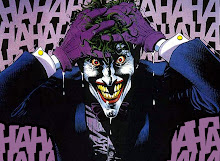

 Posts
Posts

